
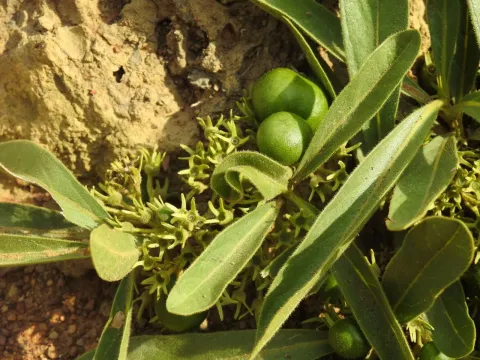
Pygmaeothamnus
Pygmaeothamnus
Pygmaeothamnus is a genus of shrubs within the Rubiaceae family, widely distributed across the southern regions of Africa. These plants are uniquely adapted to the harsh environmental conditions of savanna ecosystems and rocky landscapes.
What the section contains

Pygmaeothamnus
Agricultural success with this crop requires an understanding of its preference for well-drained, sandy or gravelly soils. Given their natural habitat, they are extremely intolerant of waterlogged conditions, which necessitates precise irrigation management if cultivated in controlled environments.
Climate-wise, the plant thrives under conditions of high solar irradiance and significant temperature fluctuations characteristic of its native habitat. It shows remarkable resilience to prolonged dry spells, making it a candidate for low-input cropping in arid regions.
From a botanical standpoint, Pygmaeothamnus is characterized by its woody structure and tough foliage, which serve as primary survival mechanisms against water loss. Its growth pattern is typically compact, allowing it to withstand high winds and environmental stress efficiently.
The economic utility of this genus is mainly tied to its potential in specialized landscaping and environmental restoration projects. Its ability to colonize degraded soils makes it a subject of interest for ecological management in areas facing desertification.