
Psychotria zeylanica
Psychotria zeylanica
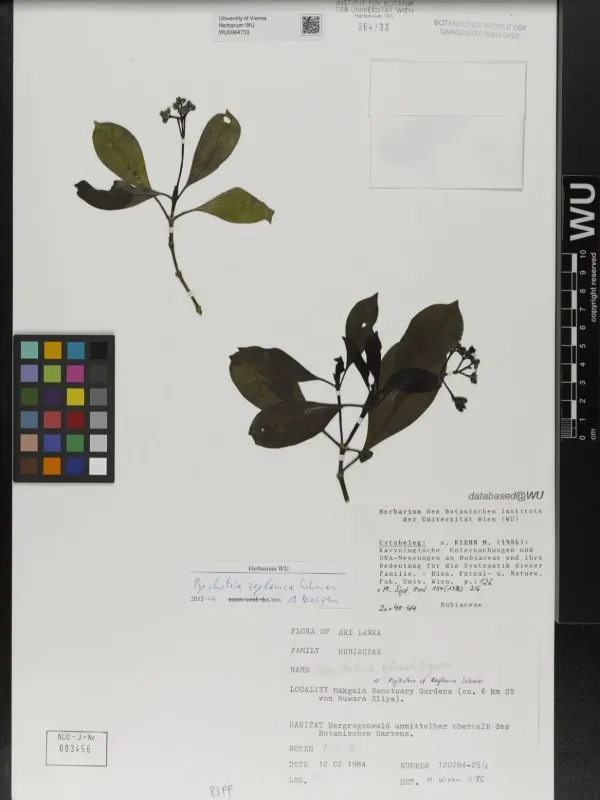
Description
Sowing dates
Psychotria zeylanica belongs to the Rubiaceae family and is recognized for its specific reproductive needs typical of tropical understory shrubs.
Propagation is generally performed through seeds or stem cuttings, requiring a high-humidity environment and stable thermal conditions to succeed.
When starting from seeds, it is essential to use a peat-based sterile medium to avoid pathogen outbreaks which are common in warm environments.
Cuttings should be taken from healthy, non-flowering shoots during the active growing season to ensure high rates of rooting success.
Young plants require careful monitoring and gentle transition to the ambient environment to ensure they are robust enough for long-term growth.
Growing requirements
Native to the moist tropical forests of Sri Lanka, this plant thrives in areas where humidity levels remain consistently high throughout the year.
The substrate must be well-draining, slightly acidic, and rich in organic matter to mimic the natural forest floor conditions it originates from.
Temperature management is critical; the species does not tolerate cold drafts and requires a minimum of 20 degrees Celsius for healthy metabolic processes.
Indirect light is preferred as direct tropical sun exposure can be too intense, leading to chlorosis and leaf burn on mature foliage.
Regular maintenance involves checking soil moisture and ensuring that water does not accumulate at the root zone to prevent hypoxia.
Main diseases and pests
Spider mites are the most common pest that attacks this species, particularly during drier periods when natural humidity levels are not met.
Root rot is the primary physiological threat caused by poor drainage and excessive watering, often complicated by fungal pathogens in the soil.
Scale insects and mealybugs may also infest the stems, particularly where the plant is maintained in a stagnant air environment.
Preventative measures include the use of neem oil or mild insecticidal soaps, ensuring that treatment is applied during the early stages of infestation.
Maintaining proper air circulation around the plant helps to reduce the incidence of fungal leaf spots and bacterial infections.