
Psychotria longipetiolata
Psychotria longipetiolata
Description
Growing requirements
Psychotria longipetiolata is a distinctive member of the Rubiaceae family. This evergreen shrub is native to the tropical forests of the Pacific islands, where it typically thrives in the humid conditions of the forest understory.
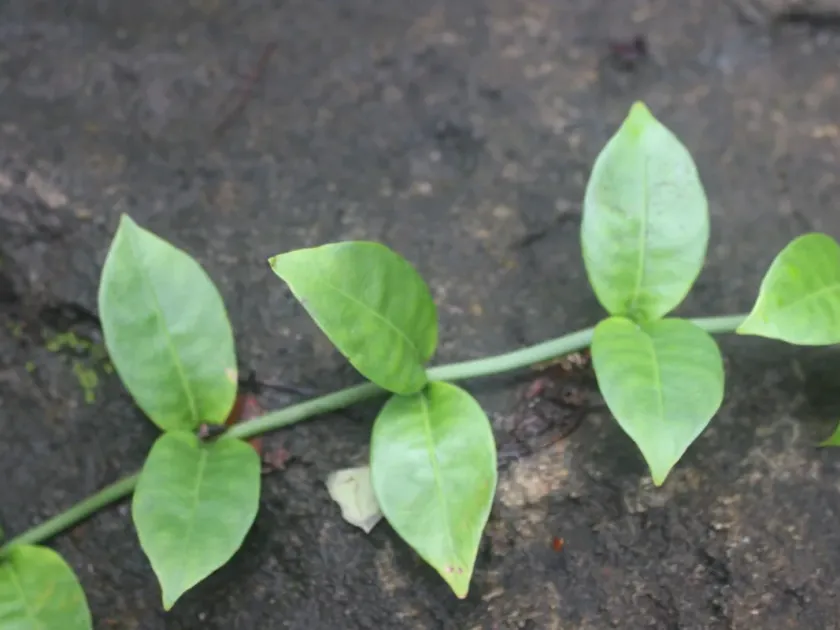
Botanically, it is recognized for its elongated petioles that support broad leaves, an adaptation designed to maximize light capture in the deep shade. The plant maintains a compact growth habit, typical for forest floor species in its native range.
The cultivation of this species demands stable tropical temperatures and high atmospheric humidity. It is extremely sensitive to temperature drops and requires a specialized indoor or greenhouse environment to maintain its health and physiological functions.
Soil requirements focus on organic richness and excellent drainage properties. A slightly acidic substrate, mimicking the leaf mold environment of tropical forests, provides the necessary nutrients for vigorous development and leaf production.
In terms of utilization, the plant serves primarily as a specimen for botanical study and conservation programs. Its role in the ecosystem is linked to supporting local biodiversity, as it provides shelter and resources for specialized insect species.
Main diseases and pests
The primary threats to Psychotria longipetiolata in cultivation involve fungal pathogens triggered by poor air circulation. Overwatering is the most common cause of root rot, which can quickly prove fatal to the shrub in controlled environments.
Pest pressure is often manifested by sap-sucking insects like mealybugs and scale insects. These pests colonize stems and leaf undersides, extracting sap and weakening the plant's structural integrity over prolonged periods of infestation.
Effective management includes regular monitoring and the implementation of cultural practices that favor plant health. If pest populations exceed threshold levels, the application of gentle insecticidal soaps or horticultural oils is recommended.
Maintaining a clean growing space and removing fallen leaves help prevent the onset of fungal spores. Ensuring that the substrate dries slightly between waterings is a critical preventative measure against root-borne pathogens.
For large-scale collections, implementing automated climate control systems assists in minimizing stress factors. Proper ventilation remains the single most important factor in reducing disease incidence and ensuring long-term plant survival.