
Psychotria alba
Psychotria alba
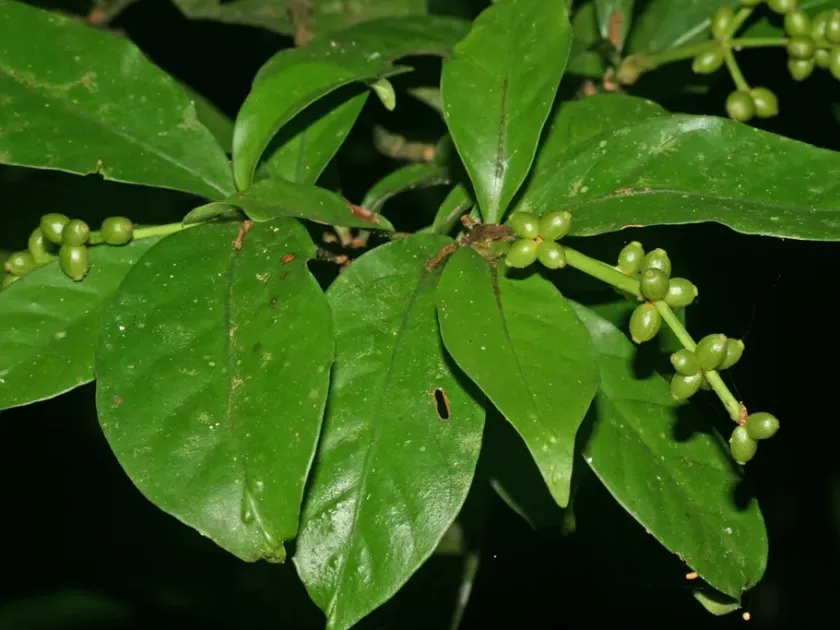
Description
Growing requirements
Psychotria alba is a perennial shrub belonging to the Rubiaceae family, native to the tropical regions of Central and South America. This plant is known for its distinct foliage and white inflorescences that appear during the favorable season.
The cultivation of this crop requires a controlled environment with high humidity levels, ideally above 70 percent. It thrives in temperatures ranging from 20 to 28 degrees Celsius and cannot withstand frost or cold drafts.
Soil requirements involve a well-draining, nutrient-rich substrate, preferably enriched with leaf mold and perlite. A pH level between 5.5 and 6.5 is optimal for nutrient absorption and healthy root development.
Light management is crucial for Psychotria alba, as it prefers bright, filtered sunlight. Excessive exposure to intense direct sunlight can damage the leaves, causing bleaching and necrosis, while low light leads to leggy growth.
The хозяйственное use of this species focuses primarily on botanical collections and specific secondary metabolite research. It is rarely grown on a commercial agricultural scale but is valued in niche medicinal and ornamental markets.
Main diseases and pests
Common pests include spider mites and scale insects, which often infest the plant under suboptimal humidity conditions. Regular inspection of the leaf underside is recommended.
Root rot, primarily caused by Phytophthora or Pythium species, remains the most significant threat to the plant's longevity. Ensuring proper drainage is the most effective preventative measure against these pathogens.