
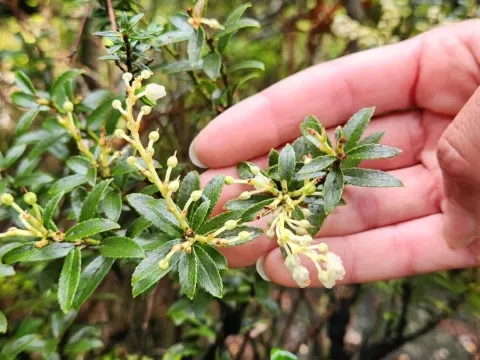
Gaultheria
Gaultheria
Propagation of Gaultheria is typically achieved through vegetative methods like cuttings or seed sowing, which require a cold stratification period of several months.
What the section contains
 Chinese gaultheria
Gaultheria sinensis
Chinese gaultheria
Gaultheria sinensis
 Creeping snowberry
Gaultheria hispidula
Creeping snowberry
Gaultheria hispidula
 Creeping wintergreen
Gaultheria humifusa
Creeping wintergreen
Gaultheria humifusa
 Gaultheria adenothrix
Gaultheria adenothrix
Gaultheria adenothrix
 Gaultheria antarctica
Gaultheria antarctica
Gaultheria antarctica
 Gaultheria antipoda
Gaultheria antipoda
Gaultheria antipoda
 Gaultheria buxifolia
Gaultheria buxifolia
Gaultheria buxifolia
 Gaultheria caudata
Gaultheria codonantha
Gaultheria codonantha
Gaultheria caudata
Gaultheria caudata
Gaultheria codonantha
Gaultheria codonantha
 Gaultheria cumingiana
Gaultheria cumingiana
Gaultheria cumingiana
 Gaultheria cuneata
Gaultheria cuneata
Gaultheria cuneata
 Gaultheria depressa
Gaultheria depressa
Gaultheria depressa
 Gaultheria domingensis
Gaultheria domingensis
Gaultheria domingensis
 Gaultheria eriophylla
Gaultheria forrestii
Gaultheria forrestii
Gaultheria eriophylla
Gaultheria eriophylla
Gaultheria forrestii
Gaultheria forrestii
 Gaultheria fragrantissima
Gaultheria fragrantissima
Gaultheria fragrantissima
 Gaultheria griffithiana
Gaultheria hirtiflora
Gaultheria hirtiflora
Gaultheria griffithiana
Gaultheria griffithiana
Gaultheria hirtiflora
Gaultheria hirtiflora
 Gaultheria hispida
Gaultheria hispida
Gaultheria hispida
 Gaultheria hookeri
Gaultheria hookeri
Gaultheria hookeri
 Gaultheria hybrids
Gaultheria hybrids
Gaultheria hybrids
 Gaultheria itoana
Gaultheria itoana
Gaultheria itoana
 Gaultheria miqueliana
Gaultheria miqueliana
Gaultheria miqueliana
 Gaultheria nubicola
Gaultheria nubicola
Gaultheria nubicola
 Gaultheria nummularioides
Gaultheria nummularioides
Gaultheria nummularioides
 Gaultheria oppositifolia
Gaultheria oppositifolia
Gaultheria oppositifolia
 Gaultheria phillyreifolia
Gaultheria phillyreifolia
Gaultheria phillyreifolia
 Gaultheria pyrolifolia
Gaultheria pyrolifolia
Gaultheria pyrolifolia
 Gaultheria pyroloides
Gaultheria pyroloides
Gaultheria pyroloides
 Gaultheria semi-infera
Gaultheria stapfiana
Gaultheria stapfiana
Gaultheria tetramera
Gaultheria tetramera
Gaultheria thymifolia
Gaultheria thymifolia
Gaultheria semi-infera
Gaultheria semi-infera
Gaultheria stapfiana
Gaultheria stapfiana
Gaultheria tetramera
Gaultheria tetramera
Gaultheria thymifolia
Gaultheria thymifolia
 Gaultheria trichophylla
Gaultheria trichophylla
Gaultheria trichophylla
 Gaultheria wardii
Gaultheria yunnanensis
Gaultheria yunnanensis
Gaultheria wardii
Gaultheria wardii
Gaultheria yunnanensis
Gaultheria yunnanensis
 Oval-leaf wintergreen
Gaultheria ovatifolia
Oval-leaf wintergreen
Gaultheria ovatifolia
 Rock gaultheria
Gaultheria rupestris
Rock gaultheria
Gaultheria rupestris
Gaultheria
The optimal time for planting in the field is during the early spring once the threat of heavy frost has passed or in the early autumn for root establishment.
When starting from seeds, use a well-draining acidic substrate and maintain temperatures between 15 and 20 degrees Celsius to ensure germination.
It is vital to place seedlings in prepared beds with high organic content, ensuring sufficient space for the root system to expand horizontally.
Young plants require consistent moisture and protection from harsh environmental conditions during their first season of growth.
Gaultheria belongs to the Ericaceae family and thrives in acidic soils, specifically requiring a pH range of 4.0 to 5.5 to absorb nutrients effectively.
Originating from North America and Asia, these plants prefer cool climates with high atmospheric humidity and protection from intense, direct sunlight.
Partial shade is ideal for cultivation, as the leathery leaves can easily scorch when exposed to excessive heat or midday sun.
Mulching with pine needles or acidic bark is essential to preserve soil moisture, inhibit weed growth, and maintain the necessary acidic environment.
The plants are sensitive to alkaline water, so irrigation should be performed with rainwater or water treated to lower the pH levels.
Fungal pathogens such as gray mold and leaf spots are the most significant threats to Gaultheria, especially in poorly ventilated or overly wet areas.
Proper spacing between plants is critical to prevent the spread of diseases and to promote adequate airflow through the foliage.
Spider mites represent the primary pest challenge, thriving in hot and dry conditions where they damage leaf tissues by sucking sap.
Regular monitoring of the underside of the leaves is necessary to detect early signs of pest infestation and apply appropriate control measures.
Integrated pest management, including pruning affected parts and maintaining optimal soil conditions, ensures the longevity of the plantings.
The primary commercial use of certain Gaultheria species is for the extraction of wintergreen oil, which is valued for its aromatic and medicinal properties.
Leaves are harvested at the peak of their growth cycle to maximize the content of essential oils and other bioactive compounds.
In landscaping and floriculture, the berries are highly sought after for their ability to remain on the shrub throughout the winter months.
Commercial producers focus on selecting varieties that provide both visual appeal and high yield of berries or foliage for the winter decorative market.
Proper harvesting techniques ensure that the plant continues to thrive and produce consistent growth for subsequent production cycles.