
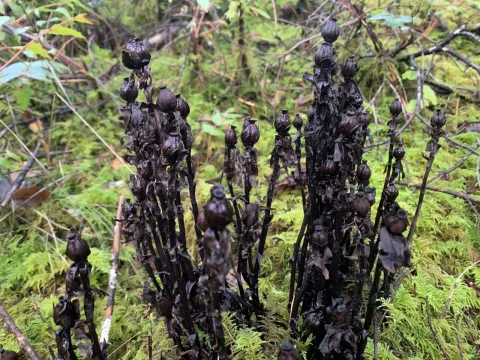
Ghost plant
Monotropa
The ghost plant (Monotropa), belonging to the Ericaceae family, is a rare example of a myco-heterotrophic plant. It lacks chlorophyll and is physically incapable of photosynthesis, which distinguishes it from conventional agricultural crops.
What the section contains


Ghost plant
Instead of relying on sunlight, the ghost plant derives all its nutritional requirements from a complex symbiotic relationship with mycorrhizal fungi. These fungi are connected to the root systems of trees, making the ghost plant indirectly dependent on forest vegetation.
This plant thrives in deep, dark, and moist forest soils that are rich in decaying organic matter. It requires a specific microclimate that only mature, undisturbed forest environments can provide, characterized by constant shade and high humidity.
Cultivating the ghost plant in an agricultural setting is currently impossible. It cannot be propagated through seeds or cuttings in a greenhouse, as it requires an established fungal network in the soil to survive.
Temperature stability is crucial for the development of its fleshy, translucent stems. Exposure to direct sunlight or dry air conditions will cause the plant to wilt rapidly, as it lacks the standard protective epidermis found in photoautotrophic plants.
The primary threat to the ghost plant is the destruction of its habitat through deforestation or soil disturbance. Since it relies on a delicate fungal network, any physical damage to the forest floor effectively terminates the plant's food supply.
As this species is not an agricultural crop, it is not susceptible to standard crop pests or diseases. However, its succulent stems can be targeted by slugs and snails, which can cause significant mechanical damage during the flowering phase.
Soil acidification or pollution caused by industrial activity can disrupt the vital mycorrhizal associations. Once the host fungus is compromised, the ghost plant loses its ability to intake carbon and nutrients.
Invasive plant species that alter the soil chemistry can also suppress the growth of the necessary host fungi. This leads to a decline in ghost plant populations, making them excellent bio-indicators of forest health.
Conservation of the ghost plant involves strictly preserving the forest floor and ensuring that native fungal communities remain intact. Attempts to move the plant to a new location rarely succeed due to the specificity of the subterranean fungal partners.