
Forrest's rhododendron
Rhododendron forrestii
Description
Growing requirements
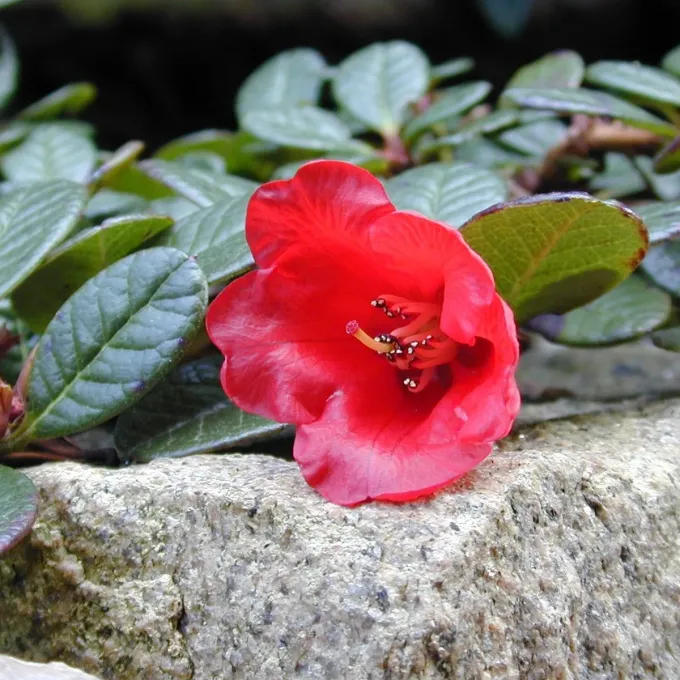
Forrest's rhododendron (Rhododendron forrestii) is a compact, evergreen shrub belonging to the Ericaceae family. Native to the high-altitude regions of Yunnan, China, it is known for its creeping habit and ability to thrive on rocky terrain and alpine slopes.
This species requires specific environmental conditions to prosper, preferring a cool, temperate climate with high atmospheric humidity. It is sensitive to intense heat and direct sunlight, so it performs best in sheltered spots under the light shade of larger garden trees.
The soil profile is critical for this rhododendron; it demands a highly acidic substrate with a pH between 4.5 and 5.5. Furthermore, the soil must be light and well-draining, as the roots are highly susceptible to rot if they sit in water-logged conditions for extended periods.
Cultural practices should emphasize consistent moisture levels using lime-free water. Applying a thick layer of pine needle mulch is highly recommended, as it maintains soil moisture, suppresses weeds, and preserves the essential acidity of the root zone throughout the growing season.
In landscaping, Forrest's rhododendron is prized for its low-growing structure and brilliant red flowers. It is an excellent choice for rock gardens, heather beds, and containers, providing a distinct ornamental value in regions with appropriate acidic and moist environments.
Main diseases and pests
The most severe threats to Rhododendron forrestii are soil-borne fungal pathogens, particularly Phytophthora root rot. This condition thrives in poorly drained soils and can cause the sudden collapse of the shrub, making prevention through soil management the primary defense.
Leaf-spot diseases, including those caused by Septoria or Cercospora species, are also common issues in humid environments. These infections result in discolored foliage, which reduces the plant's aesthetic appeal and overall photosynthetic capacity if not addressed by removing infected leaves.
Pests such as the rhododendron bug and spider mites are frequent invaders. These insects suck sap from the underside of leaves, causing a stippled or yellowed appearance that can eventually lead to leaf drop and stunted growth during the summer months.
Integrated pest management involves monitoring foliage regularly and using horticultural oils or systemic insecticides when outbreaks occur. It is important to treat plants early to prevent these pests from spreading to neighboring vegetation in the garden.
Maintaining plant health through proper site selection and balanced fertilization is the most effective way to avoid these problems. A strong, well-nourished plant is far more resilient to the challenges posed by local pests and diseases than one grown in improper conditions.