
Gaultheria wardii
Gaultheria wardii
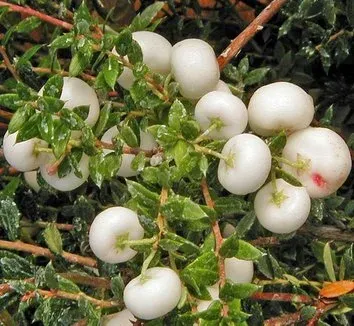
Description
Sowing dates
Propagation of Gaultheria wardii is primarily achieved through seeds or vegetative methods such as layering. Seeds should be sown in early spring in specialized containers with an acidic substrate, ensuring consistent moisture levels are maintained throughout the process.
Successful germination often requires pre-stratification of the seeds for one to two months. This period of cold exposure significantly improves the rate of germination and ensures uniform plant development.
Vegetative propagation via cuttings is best performed in late summer using semi-hardwood stems. The cuttings thrive in a light, peat-based mix enriched with perlite, provided that high ambient humidity is maintained for rooting.
Young plants require a gradual hardening-off period before being transplanted to their permanent outdoor location. It is recommended to plant them in spring after the risk of frost has passed, selecting sheltered sites.
Sowing depth should be minimal as the seeds require sufficient light exposure for the initial stages of seedling emergence and root system establishment.
Growing requirements
As a member of the Ericaceae family, Gaultheria wardii has strict soil requirements. The culture thrives exclusively in well-drained, acidic soils with a pH range between 4.5 and 5.5, rich in organic matter.
Originating from mountainous regions, the plant performs best in cool and humid climates. It is sensitive to extreme heat and prolonged drought, requiring precise moisture management in the root zone.
The ideal planting site provides dappled shade or indirect light, as direct exposure to intense midday sun can cause severe leaf scorch. Sites under canopy cover or north-facing walls are optimal.
Winter hardiness is moderate; in regions with harsh winters, protection using conifer boughs or a thick layer of pine needle mulch is necessary to prevent deep soil freezing and root damage.
Irrigation should be performed using soft water, such as collected rainwater. Using tap water can lead to alkaline accumulation in the soil, which is detrimental to the health of Ericaceae species.
Main diseases and pests
Fungal diseases are the primary threats to Gaultheria wardii, especially in conditions of poor drainage or high humidity. Phytophthora root rot is particularly dangerous and can lead to rapid plant decline.
Powdery mildew may affect the foliage during periods of fluctuating temperatures or stagnant air. Regular applications of systemic fungicides are recommended to keep the plants free from fungal pathogens.
Spider mites are common pests that thrive during dry, hot weather. These mites feed on leaf sap, which causes discoloration and premature leaf drop if left unmanaged.
Aphids can also infest new growth, reducing the plant's ornamental value. Proactive monitoring and the use of targeted insecticides during the active growth season are essential for healthy cultivation.
- Sanitary pruning to remove dead or diseased growth.
- Effective soil drainage implementation to avoid waterlogging.
- Regular weeding to reduce resource competition.
- Strategic mulching to regulate soil temperature and moisture levels.