
Rock gaultheria
Gaultheria rupestris
Description
Growing requirements
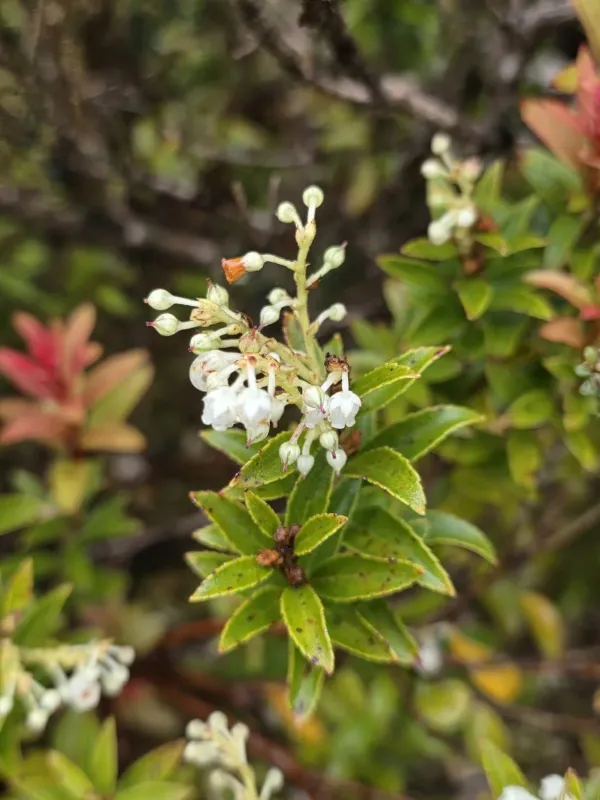
Rock gaultheria (Gaultheria rupestris) is a low-growing evergreen shrub belonging to the Ericaceae family. Native to the alpine and subalpine regions of New Zealand, this plant has adapted to rocky, well-drained mountain slopes and high-elevation environmental conditions.
For successful cultivation, the plant requires acidic soil conditions with a pH range typically between 4.5 and 5.5. It thrives in porous, moisture-retentive substrates, such as a mix of peat, pine bark, and coarse sand, which mimics its natural mountain habitat.
Climate requirements for this species are relatively specific, favoring cool and humid summers. It does not tolerate prolonged heat or drought well, making it essential to provide partial shade in warmer climates to prevent the roots from overheating and drying out.
Cultural practices include consistent watering to keep the soil moist but not waterlogged. Mulching is a crucial technique for this plant; a layer of acidic organic matter, like pine needles, helps regulate soil temperature and moisture levels throughout the growing season.
In terms of хозяйственное (landscape) use, Rock gaultheria is primarily valued as an ornamental shrub. Its dense foliage, attractive small white flowers, and subsequent berries make it a sought-after addition for rock gardens, heather beds, and containers.
Main diseases and pests
The most significant threats to Rock gaultheria are soil-borne pathogens. Root rot is a common issue when plants are situated in heavy, poorly drained clay soils, which allow water to accumulate and deprive the roots of necessary oxygen.
Pests such as aphids and spider mites can infest the foliage, particularly if the plant is grown in greenhouse conditions or areas with stagnant air. Monitoring the undersides of leaves during the growing season is necessary to manage these insect populations early.
Fungal leaf spots can occur when plants are crowded or when foliage remains wet for extended periods. To mitigate this risk, gardeners should ensure adequate spacing between plants to encourage airflow and reduce the time leaves spend wet after watering or rain.
Nutrient deficiencies, particularly chlorosis caused by high pH levels, can weaken the plant and make it more susceptible to other diseases. Ensuring the soil remains acidic is the most effective way to prevent these physiological issues.
Integrated management includes prompt removal of any dead or dying tissue. Using specialized ericaceous fertilizers can also improve plant vigor, helping it better resist environmental stress and minor pathogen attacks during the peak growing season.