
Gaultheria domingensis
Gaultheria domingensis
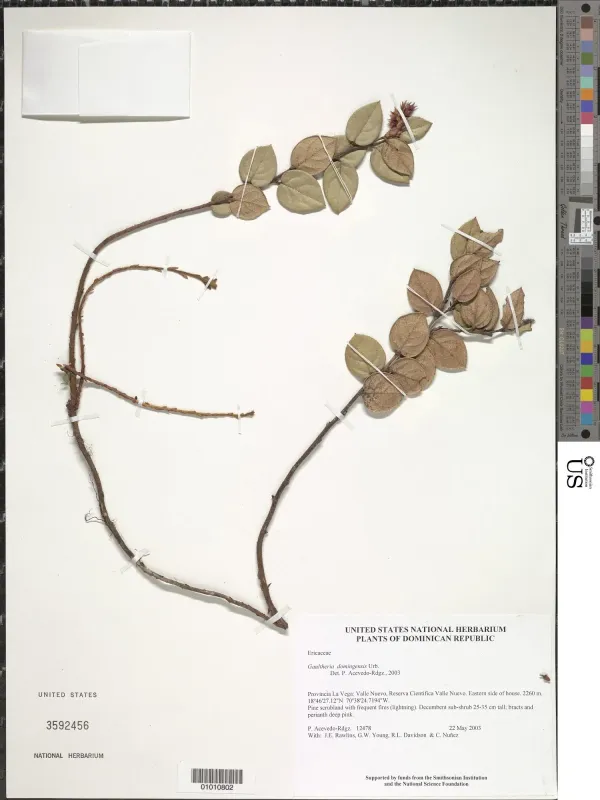
Description
Growing requirements
Gaultheria domingensis is a distinct member of the Ericaceae family, known for its elegant evergreen foliage. Native to the mountainous regions of the Dominican Republic, it thrives in cool, high-altitude climates.
The plant requires acidic, well-draining soil rich in organic matter to mimic its natural montane environment. It is highly sensitive to root disturbance and excessive soil moisture, making drainage a priority.
Climatic requirements involve stable, moderate temperatures and high ambient humidity. It performs best in partial shade, as intense sunlight can dehydrate the plant and cause leaf scorch.
Agronomic management focuses on preventing desiccation and maintaining acidic soil pH. Mulching is recommended to stabilize soil moisture levels and protect the shallow root system from temperature fluctuations.
In cultivation, this plant is primarily utilized for its aesthetic value in landscape design, particularly in regions that mirror its native temperate mountain zones.
Main diseases and pests
Root rot caused by Phytophthora species is a major threat if the irrigation regime is not strictly controlled. Proper soil aeration is the most effective preventative measure against these pathogens.
Spider mites are common pests that thrive in dry environments. Monitoring the underside of the leaves is crucial, as early detection prevents the formation of damaging webs and leaf damage.
Fungal leaf spots can occur when air circulation is inadequate. Ensuring that plants have enough space and keeping the canopy dry during evening hours significantly reduces infection risks.
Nutrient toxicity or deficiency can occur rapidly due to the sensitivity of the Ericaceae root system. Fertilization must be strictly balanced and specifically formulated for acid-loving shrubs.
Integrated pest management strategies should emphasize biological control and clean cultural practices to ensure the long-term health of the shrub specimens.