
Five-leaf azalea
Rhododendron quinquefolium
Description
Growing requirements
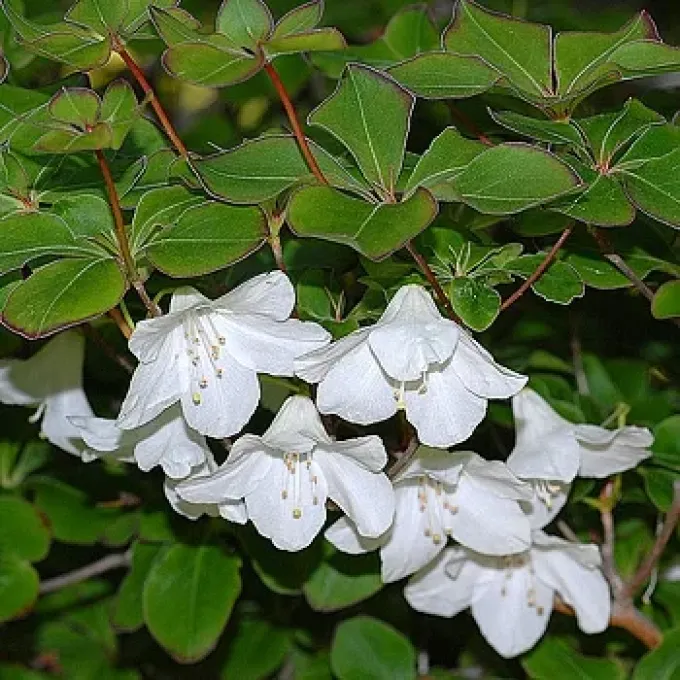
Rhododendron quinquefolium, commonly known as the five-leaf azalea, is a deciduous shrub belonging to the Ericaceae family. It is highly valued for its elegant, light-colored flowers and unique leaves that grow in clusters of five at the tips of the branches.
Originating from the mountainous regions of Japan, this species is adapted to cool and temperate environments. In cultivation, it thrives best in areas that mimic its native habitat, offering protection from harsh winds and intense mid-day heat.
The fundamental requirement for successful growth is an acidic, well-draining soil rich in organic matter. Achieving the correct soil pH is crucial, as the plant cannot absorb necessary nutrients like iron if the soil becomes too alkaline or neutral.
Light management is a critical aspect of its cultivation. While it enjoys a bright environment, direct sunlight can easily scorch its delicate foliage. Therefore, it is ideal to plant this shrub in filtered or partial shade, such as under a canopy of larger trees.
Proper agronomic practices include the regular application of mulch to keep the root zone cool and moist. Since the root system is shallow and sensitive, avoid deep cultivation around the plant, relying instead on organic leaf mold or pine bark mulch to maintain soil health.
Main diseases and pests
Phytophthora root rot is one of the most serious threats to Rhododendron quinquefolium. This pathogen thrives in waterlogged conditions, making proper soil drainage a non-negotiable factor for long-term health and survival.
Leaf spot diseases, caused by various fungal pathogens, can affect the shrub during periods of high humidity. It is essential to ensure good air circulation within the canopy to minimize the risk of these infections spreading throughout the plant.
Iron chlorosis is a frequent issue caused by inadequate soil acidity. The yellowing of leaves, while veins remain green, is a clear indicator that the plant is struggling with nutrient uptake and requires immediate soil acidification.
Pests such as rhododendron bugs and spider mites can damage leaves, leading to a loss of vigor. Early detection through regular monitoring of the leaf undersides is recommended for effective pest management.
- Maintaining proper plant spacing
- Using pathogen-free planting material
- Removing infected debris
- Applying specialized fertilizers for acid-loving plants
- Ensuring consistent, non-alkaline irrigation