
Creeping wintergreen
Gaultheria humifusa
Description
Growing requirements
Creeping wintergreen (Gaultheria humifusa) is a perennial dwarf shrub belonging to the Ericaceae family. It is native to the subalpine and alpine regions of North America, where it thrives in moist, cool, and rocky environments.
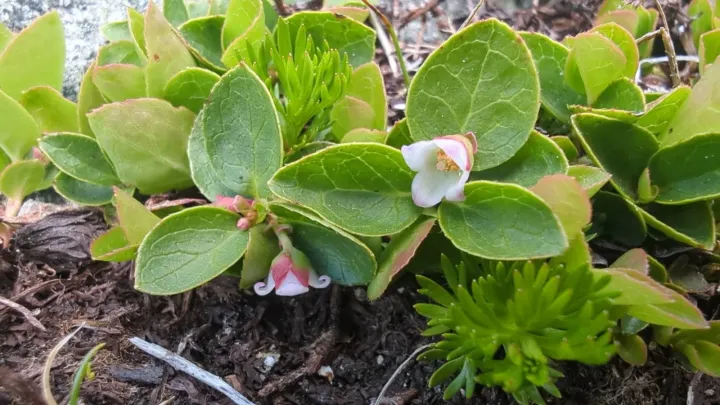
The plant is characterized by its prostrate, creeping growth habit, creating low mats rarely exceeding 15 centimeters in height. Its small, evergreen leaves provide a decorative element throughout the seasons, making it a popular choice for rock gardens.
Cultivation requires specific soil conditions, specifically a well-drained, acidic substrate rich in organic matter. Gardeners often use mixtures of peat moss, pine bark, and sand to mimic the natural soil profile of mountain slopes and prevent root rot.
Regarding climate, the plant demands cool temperatures and high atmospheric humidity. It struggles in regions with hot, arid summers, where adequate shading and frequent misting are essential to prevent leaf scorch and ensure the plant's long-term survival.
Its primary use is ornamental, often utilized in alpine plant collections or as groundcover in shaded, acidic garden beds. While the berries are edible, the plant is rarely cultivated for large-scale production due to its slow growth and specific environmental needs.
Main diseases and pests
The most significant threats to Gaultheria humifusa are fungal infections caused by poor drainage and waterlogged soil. Phytophthora and other root-rotting pathogens are the primary reasons for crop loss in suboptimal conditions.
Pests such as spider mites and mealybugs can infest the foliage, particularly in greenhouse environments or during dry spells. Maintaining a stable moisture level and ensuring good air circulation are the best defenses against these common threats.