

Disease · fungal · affects Almond, Anemone coronaria, Apple
Especially harmful
Tomato mosaic virus
Tomato mosaic virus
Description
Symptoms
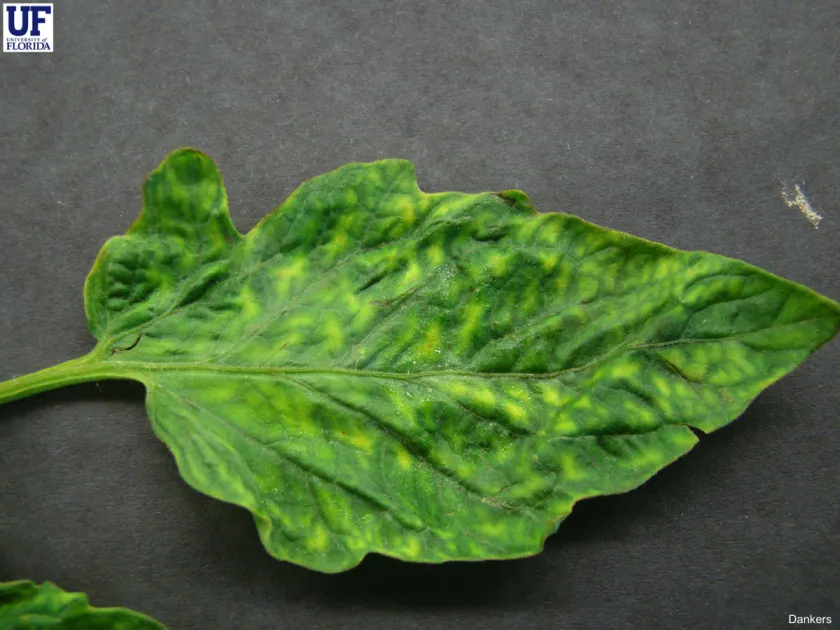
The most characteristic symptom of ToMV is a distinct mosaic pattern on leaves, manifesting as alternating patches of light and dark green. Leaves may become severely deformed, twisted, or filiform (thread-like).
In tomato fruits, infection often leads to uneven ripening and necrotic spots, significantly reducing the market value of the crop. Plants generally show stunted growth and decreased vigor.
Ornamental hosts like Calceolaria and Browallia often display systemic chlorosis and inhibited flower development. The severity of symptoms depends on the specific viral strain and the host's genetic susceptibility.
In some cases, necrosis may occur on stems, leading to longitudinal streaking. This often results in the premature death of stems or branches, particularly under high-stress conditions.
Diagnostic confusion is common, as initial symptoms may resemble mineral deficiencies or hormone damage. Laboratory testing, such as ELISA, is recommended for definitive identification in commercial operations.
Pathogen
The Tomato mosaic virus (ToMV) is a highly stable plant pathogen belonging to the genus Tobamovirus. It is recognized for its extreme environmental durability, capable of persisting in soil, plant debris, and on various surfaces for extended periods.
ToMV possesses a wide host range, affecting essential crops such as tomatoes, peppers, and papaya. It also impacts several ornamental plants, including Anemone coronaria, Browallia speciosa, Calceolaria, and Campanula carpatica.
The virus can also infect crops like peanuts and celery, making crop rotation planning essential. Because it is highly persistent, it can survive in the field or greenhouse long after the primary host has been removed.
Unlike many other plant viruses, ToMV does not rely on insect vectors such as aphids or whiteflies. It is primarily transmitted mechanically, making human activity a significant factor in its dissemination.
The viral particles can persist in seed coats or internal tissues if the seeds are harvested from infected fruits, leading to early-season outbreaks in nursery settings.
Conditions for development
ToMV thrives under the same conditions that are optimal for crop growth, including warm temperatures and bright light. These factors accelerate the viral replication cycle within plant tissues.
Mechanical injury is the primary mode of transmission. Pruning, staking, and harvesting serve as prime opportunities for the virus to spread from infected plants to healthy ones through contaminated tools or hands.
Seed-borne transmission is a critical risk factor. If seeds are not properly treated or sourced from disease-free stock, the infection can quickly spread throughout a greenhouse during the transplanting phase.
Soil and debris act as long-term reservoirs. Viral particles can remain infectious in the ground for years, especially if crop residues are not properly sanitized or removed after harvest.
High-density planting increases the risk of plant-to-plant contact. If leaves rub against each other and suffer minor micro-wounds, the virus can easily transfer, leading to rapid cluster-wide infection.
Why it matters
The primary economic impact of ToMV is a significant reduction in crop yield. Infected plants often produce low-quality, misshapen fruits that are unsuitable for fresh market sale.
By interfering with photosynthesis and nutrient uptake, the virus compromises the plant's overall physiology. This weakening leaves the crop more susceptible to secondary fungal or bacterial pathogens.
For ornamental growers, the presence of the virus renders plants unsellable. Given the high costs of specialized flower production, an outbreak can result in substantial financial losses.
There are no curative treatments for viral infections in plants. Consequently, management strategies must focus on sanitation, which is labor-intensive and costly in large-scale operations.
The presence of ToMV can trigger mandatory quarantine protocols in certain regions, severely restricting the transport and sale of nursery stock or greenhouse produce.
Protection
The most effective strategy for managing ToMV is the use of resistant cultivars and hybrids. Genetic resistance is the cornerstone of a sustainable protection program.
Implement strict hygiene protocols: sanitize all tools with a 10% bleach solution or similar disinfectant after each use, especially when moving between rows or sections.
- Routinely remove and destroy infected plants, including their root systems.
- Maintain a clean field by eliminating weeds that may act as alternative hosts.
- Treat seeds with recommended disinfectants to eliminate virus particles from the coat.
Ensure rigorous greenhouse sanitation between crop cycles, including soil steaming or chemical disinfection. This is crucial for preventing the carry-over of the virus to new plantings.
Train staff on proper handling procedures to avoid accidental mechanical transfer, such as washing hands frequently and avoiding the use of tobacco products, which can carry the virus.
In brief
48
Affects crops
Biology
Pathogens and affected parts
Pathogens
Affected plant parts
whole plantstemleaf
Content graph
Affects crops · 48
AlmondAnemone coronariaAppleApricotBrowallia speciosaCalceolariaCarpathian bellflowerCeleryChickpeaCommon beanCranberryDahliaDuracina cherryField mintFuchsiaGarden verbenaGerbera jamesoniiGrapevineImpatiensIvy-leaved pelargoniumJerusalem cherryLettucePapayaPassion fruitPeachPeanutPelargoniumPepperPeppermintPersian cyclamenPoison primrosePotatoPrimrosePrimulaPrimula malacoidesRaspberryRed cloverScented geraniumSchizanthusSchlumbergeraSchlumbergera truncataSour cherrySoybeanSpearmintSpinachStrawberryTobaccoWatermelon
Content graph
Connections · Tomato mosaic virus
Most often together:
Marketplace
Products · 197





















Community
Discussion
No discussions yet — be the first.