
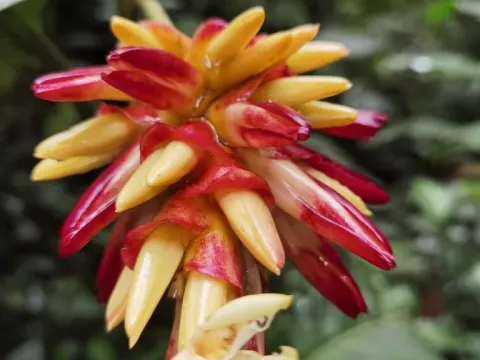
Goeppertia
Goeppertia
Goeppertia is a genus of perennial flowering plants belonging to the Marantaceae family. Originally from the tropical rainforests of the Americas, this crop requires a highly specialized environment to thrive and maintain its aesthetic quality.
What the section contains
 Goeppertia concinna
Goeppertia concinna
Goeppertia concinna
 Goeppertia elliptica
Goeppertia elliptica
Goeppertia elliptica
 Goeppertia fucata
Goeppertia fucata
Goeppertia fucata
 Goeppertia insignis
Goeppertia insignis
Goeppertia insignis
 Goeppertia kegeljanii
Goeppertia kegeljanii
Goeppertia kegeljanii
 Goeppertia legrelleana
Goeppertia legrelleana
Goeppertia legrelleana
 Goeppertia lietzei
Goeppertia lindbergii
Goeppertia lindbergii
Goeppertia lietzei
Goeppertia lietzei
Goeppertia lindbergii
Goeppertia lindbergii
 Goeppertia micans
Goeppertia micans
Goeppertia micans
 Goeppertia sanderiana
Goeppertia sanderiana
Goeppertia sanderiana
 Goeppertia undulata
Goeppertia undulata
Goeppertia undulata
 Goeppertia wallisii
Goeppertia wallisii
Goeppertia wallisii
 Goeppertia warszewiczii
Goeppertia warszewiczii
Goeppertia warszewiczii
 Goeppertia zebrina
Goeppertia zebrina
Goeppertia zebrina
Goeppertia
The climate requirements include a strictly regulated temperature range of 20 to 25 degrees Celsius. Extreme temperatures or cold drafts will almost certainly result in leaf drop and reduced vitality of the specimens.
Light management is crucial, as the foliage is adapted to the filtered light of the forest floor. Providing indirect light with a moderate intensity prevents bleaching and ensures the vibrant variegation of the leaves for which the crop is valued.
Soil requirements focus on high organic content and excellent drainage characteristics. The substrate must be porous, often composed of a blend of peat moss, pine bark, and perlite, to ensure that the root system receives adequate oxygen.
Watering protocols must maintain consistent soil moisture without waterlogging. Irrigation frequency depends on the evaporation rate, but the crop relies on high humidity levels, often exceeding 70 percent, to prevent drying and browning of the margins.
Major threats to the crop include fungal pathogens that exploit high humidity and poor aeration. Root rot is a common issue caused by overwatering, which necessitates the use of well-draining pots and substrates to prevent saturation.
Leaf spot diseases are frequent in intensive cultivation settings with poor airflow. These pathogens produce visible lesions, often spreading rapidly if humidity remains too high and leaves remain wet for extended periods after watering.
Pest management is focused on controlling the spider mite, which is the most destructive pest in low-humidity conditions. These mites can devastate a crop in days, requiring proactive monitoring and humidity maintenance to deter outbreaks.
Scale insects and mealybugs represent persistent threats that sap plant nutrients and excrete honeydew, which fosters the growth of sooty mold. Regular scouting and immediate application of systemic insecticides are standard agronomic practices.
Integrated pest management strategies involve the use of biocontrol agents where possible, complemented by targeted chemical applications. Maintaining clean tools and quarantine procedures for new stock are essential to prevent the spread of soil-borne pathogens.