
Goeppertia legrelleana
Goeppertia legrelleana
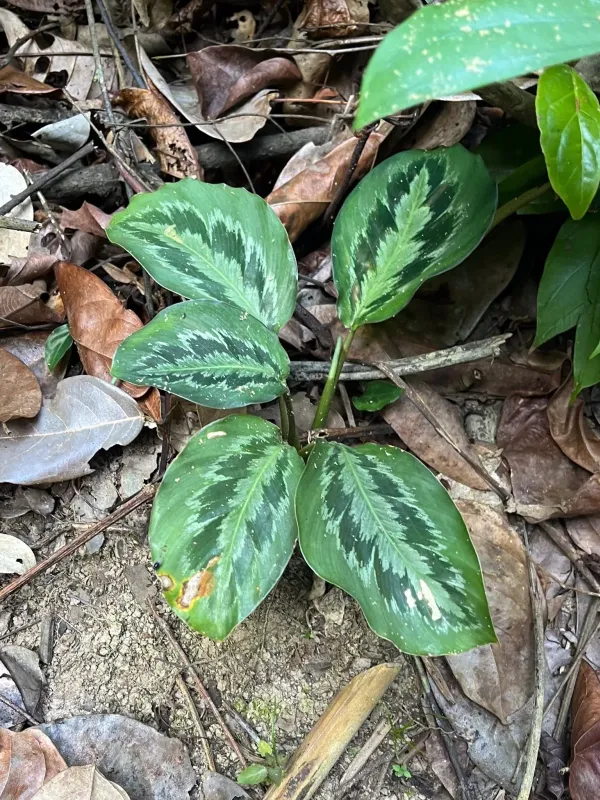
Description
Growing requirements
Goeppertia legrelleana is a perennial herbaceous plant belonging to the Marantaceae family. Native to the tropical rainforests of South America, it thrives in warm and humid environments.
Botanically, it is known for its distinctive leaf patterns and complex foliage structure. It is a shade-tolerant plant that requires filtered or indirect light to maintain its vibrant leaf coloration.
Cultivation requires a well-draining, peat-based soil mix that retains moisture while preventing root suffocation. The plant performs best in a stable temperature range between 20°C and 25°C.
High humidity is essential for the healthy development of this species. Growers must maintain humidity levels above 60% to prevent the curling or browning of leaf margins.
The main use for this crop is in ornamental horticulture and commercial interior landscaping, where it is prized for its aesthetic impact as a decorative indoor plant.
Main diseases and pests
Spider mites are the most common pest that affects this species, particularly in environments with low air humidity where the plant becomes physically stressed.
Fungal diseases, such as Fusarium or Pythium root rot, are often caused by poor drainage and excessive watering, which lead to anaerobic conditions in the root zone.
Bacterial leaf spot can also occur if water remains on the leaves for prolonged periods in a stagnant, unventilated environment, promoting pathogen growth.
Preventative measures include regular inspection of the leaf underside and ensuring good airflow around the plant to minimize the risk of infection.
Cultural control, such as avoiding overhead watering and using sterile potting media, is highly effective in managing the health of Goeppertia populations.