
Goeppertia lietzei
Goeppertia lietzei
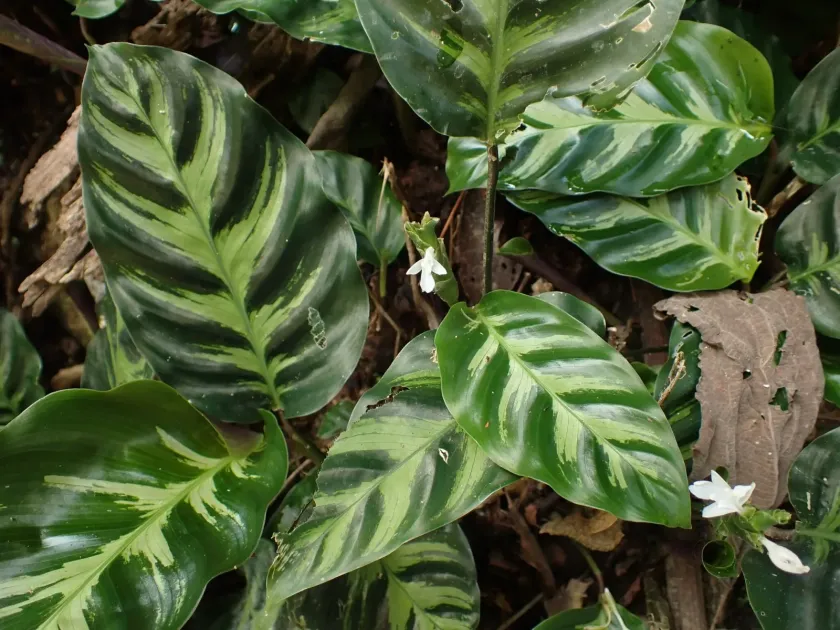
Description
Growing requirements
Goeppertia lietzei is a distinctive ornamental species belonging to the Marantaceae family. Originating from the tropical rainforests of Brazil, it thrives in warm, humid environments with dappled sunlight.
The plant is prized for its attractive foliage, which features unique variegation patterns and a purplish undersurface. Its growth habit is clumping, making it an ideal choice for indoor decorative cultivation.
Optimal growth requires a temperature range between 20°C and 25°C. It is highly sensitive to thermal fluctuations and cold drafts, which can cause significant stress to the plant tissue.
High relative humidity, ideally above 70 percent, is essential for maintaining the health of the leaves. Daily misting or the use of humidifiers is often required to simulate their native environment.
The substrate must be well-draining, loose, and slightly acidic. A mix containing peat moss, perlite, and organic bark works best to allow for sufficient aeration of the delicate root system.
Main diseases and pests
The most common pest affecting Goeppertia lietzei is the spider mite, which thrives in indoor environments where the air is consistently dry and stagnant.
Mealybugs and scale insects may also infest the plant, hiding in leaf axils and undersides, where they feed on the sap and weaken the plant's structural integrity.
Root rot is a significant threat associated with overwatering and poorly drained soil, often leading to the rapid decay of the rhizomatous root system.
Leaf spot diseases, caused by various fungal pathogens, may manifest as brown patches on the foliage, often exacerbated by water droplets sitting on leaves in cool conditions.
Regular maintenance, including wiping leaves with a damp cloth and ensuring good air circulation, is critical to minimizing the risk of infestation and disease development.