
Goeppertia concinna
Goeppertia concinna
Description
Growing requirements
Goeppertia concinna, a member of the Marantaceae family, is a distinct tropical plant known for its striking foliage. Originally native to the rainforests of Brazil, this species thrives in understory conditions characterized by high humidity and consistent, moderate warmth throughout the year.
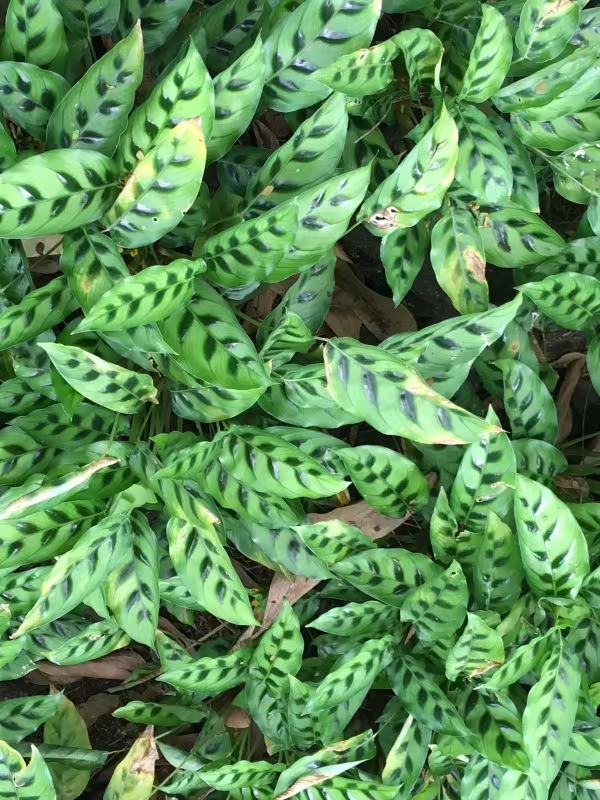
Botanically, the plant is recognized by its oval, leathery leaves which exhibit a sophisticated pattern of light and dark green stripes. A unique biological feature is the purplish hue on the underside of the leaves, which provides the plant with a highly ornamental appearance favored in commercial floriculture.
To achieve optimal growth, the crop requires an environment with ambient temperatures between 18 and 25 degrees Celsius. It is highly sensitive to cold drafts and should be kept away from heating or cooling vents to prevent leaf margin browning and tissue damage.
The substrate must be well-draining, nutrient-rich, and slightly acidic, mimicking the forest floor conditions. A mixture containing coco peat, perlite, and pine bark is recommended to provide both moisture retention and the necessary oxygen levels for the fibrous root system.
Commercial utilization of Goeppertia concinna is widespread in the interior landscaping and ornamental plant trade. Due to its aesthetic value, it serves as a premium choice for residential and commercial spaces, where it functions as a natural air purifier and a visual focal point.
Main diseases and pests
The primary agricultural threats to Goeppertia concinna include infestations by spider mites, mealybugs, and scale insects. These pests thrive in indoor environments where humidity levels are inadequately managed, leading to sap depletion and weakened structural integrity of the leaves.
Pathogenic challenges include leaf spot diseases and root rot, which are often exacerbated by overwatering or poor soil drainage. Implementing a rigorous Integrated Pest Management (IPM) plan, including sanitation and periodic application of safe horticultural oils, is essential for maintaining a healthy nursery stock.