
Goeppertia zebrina
Goeppertia zebrina
Description
Growing requirements
Goeppertia zebrina is a prominent member of the Marantaceae family. Originating from the humid rainforests of Brazil, this plant thrives in the understory layer where it is protected from direct sunlight by larger tree canopies.
The climate requirements for this culture are strictly tropical. It prefers temperatures between 20 and 25 degrees Celsius. Sudden temperature drops below 16 degrees Celsius can cause irreversible stress to the plant's metabolic processes.
Humidity management is the most critical agronomic aspect for this species. To maintain healthy foliage, a relative humidity level of 70% to 80% is recommended. Dry air leads to leaf curling and edge necrosis.
Soil composition should be based on a loose, moisture-retentive, yet well-draining substrate. A mix containing peat moss, perlite, and decomposed leaf mold is ideal to maintain a slightly acidic pH between 5.5 and 6.5.
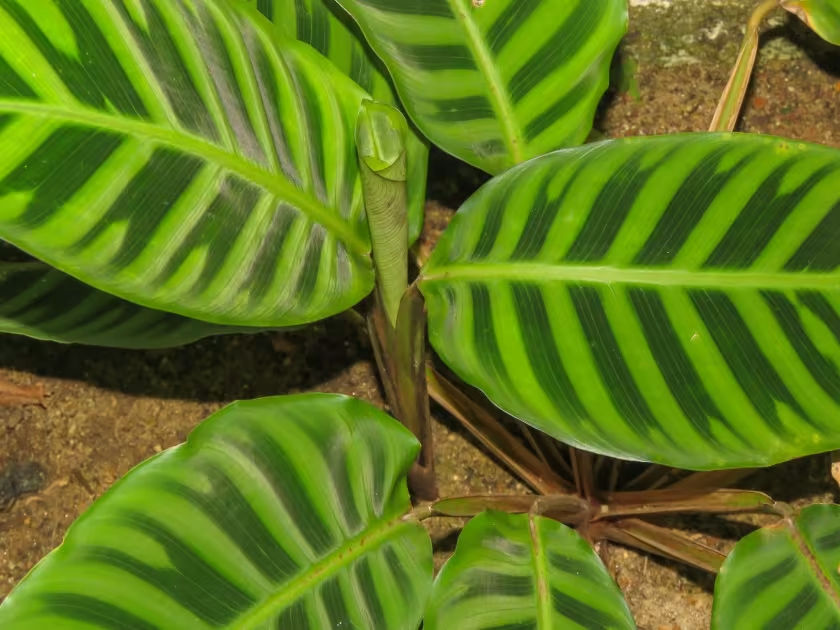
Botanically, it is known for its large, velvety leaves featuring striking dark and light green stripes. The plant is valued primarily for its ornamental foliage, which exhibits nyctinasty, moving its leaves in response to light changes throughout the day.
Main diseases and pests
Spider mites represent the primary pest threat to Goeppertia zebrina, especially in environments where humidity levels are not consistently maintained. These pests thrive in dry, stagnant air.
Root rot, caused by excessive soil moisture and poor drainage, is a common and destructive condition. It often results from the over-accumulation of water in the root zone, creating anaerobic conditions for pathogens.
Leaf spot diseases triggered by fungi are another concern, particularly when ventilation is inadequate. These infections manifest as irregular necrotic spots, requiring swift removal of affected parts and fungicide application.
Scale insects can occasionally infest the stems and undersides of leaves. Regular monitoring and physical removal, or the use of targeted horticultural soaps and oils, are effective for management.
To prevent plant health decline, ensure a consistent irrigation schedule using demineralized or soft water. The accumulation of salts and minerals in the growing medium can cause chemical damage to the root system, making the plant prone to secondary infections.