
Goeppertia sanderiana
Goeppertia sanderiana
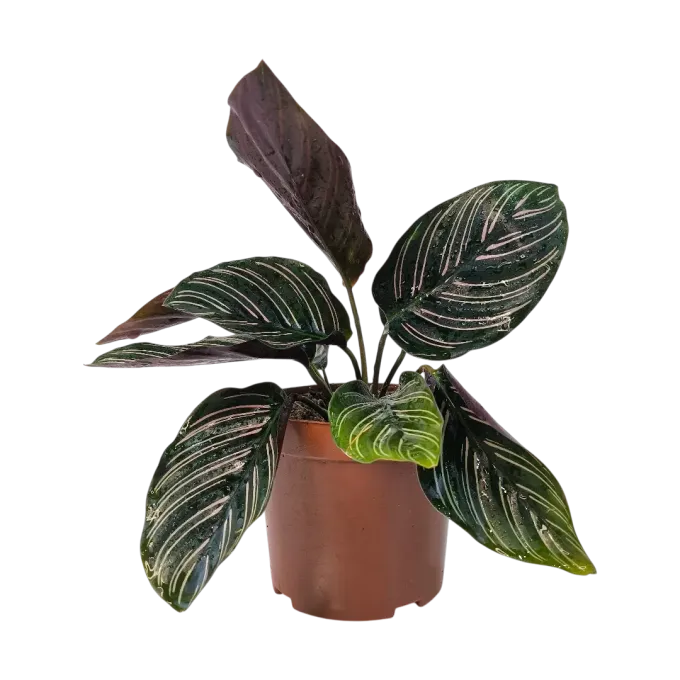
Description
Growing requirements
Goeppertia sanderiana belongs to the Marantaceae family and is native to the tropical rainforests of South America. It is a rhizomatous perennial plant appreciated for its highly decorative foliage with silver or pinkish stripes.
The culture thrives in a stable temperature range of +20°C to +25°C. It is strictly sensitive to thermal stress, and temperatures below +15°C can cause irreversible damage to the vascular system of the leaves.
Maintaining high relative humidity (above 70%) is essential for this species. In agricultural settings, misting systems or controlled greenhouse environments are used to mimic the natural Amazonian habitat.
The soil requirements include a well-draining, slightly acidic, and airy potting mix. A standard mixture consists of peat moss, perlite, and pine bark to ensure proper root aeration and moisture retention without compaction.
This species is shade-tolerant and requires diffuse lighting. Direct sunlight is strictly avoided as it causes foliar chlorosis and burning of the delicate, thin leaf tissues characteristic of the genus.
Main diseases and pests
Spider mites represent the most prevalent threat, particularly in greenhouses with suboptimal humidity levels. These pests thrive in dry environments and reproduce rapidly, causing stippling and leaf webbing.
Scale insects are common pests that adhere to the underside of leaves and stems. Their feeding causes yellowing of the foliage and secondary fungal infections that produce black sooty mold.
Root rot, primarily caused by waterlogged soil and poor drainage, is a leading cause of mortality in Goeppertia plantations. It is marked by a rapid decline in plant vigor and necrotic rhizome tissues.
Leaf spot diseases, often fungal or bacterial in origin, occur when moisture sits on the leaf surface for prolonged periods. Improving air circulation is the most effective cultural method to mitigate these outbreaks.
Mealybugs can infest the leaf axils, creating white, waxy deposits. Integrated pest management strategies, including the use of horticultural oils and predator introduction, are highly recommended for large-scale production.