
Megaphrynium
Megaphrynium
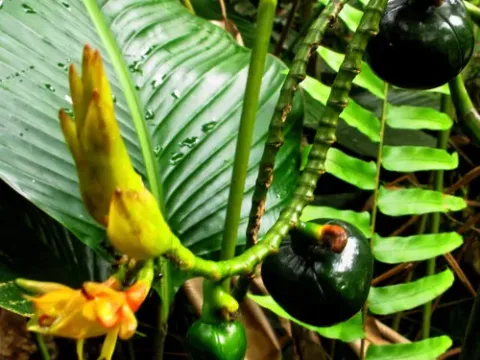
Megaphrynium is a genus of perennial herbaceous plants belonging to the Marantaceae family. These plants are native to the tropical forests of West and Central Africa, where they typically thrive in shaded and humid environmental niches under the dense forest canopy.
What the section contains

Megaphrynium
Botanically, Megaphrynium is recognized by its large, broad leaves and robust rhizome system. These structures allow the plant to store energy and nutrients, enabling it to survive in environments where light competition is intense and water availability can be seasonal.
The climate requirements for Megaphrynium center on high humidity and consistent tropical temperatures. Frost is lethal to the plant, and prolonged exposure to direct sunlight can cause significant foliage damage, leading to leaf scorching and loss of quality.
For optimal growth, the soil must be rich in organic matter and well-draining. While the plant loves moisture, stagnant water is detrimental to its rhizomes, requiring a balanced substrate that mimics the loamy and fertile floor of a tropical rainforest.
Agrotechnical maintenance involves regular mulching to preserve moisture and selective weeding to prevent competition for nitrogen and other trace elements. Managing the surrounding vegetation is key to ensuring the plant receives the dappled light it requires for photosynthesis.
The primary economic use of Megaphrynium is the harvest of its large, durable leaves. These leaves serve as a traditional, natural, and biodegradable packaging material for various food items, particularly in regions across Sub-Saharan Africa.
When preparing food, the leaves are used to wrap items before boiling or roasting. This technique not only keeps the food intact but also imparts a subtle, natural flavor to the dish, while the leaves themselves remain heat-resistant and durable during the cooking process.
Harvesting is performed manually by selecting mature, healthy leaves without compromising the central growth point of the plant. A sustainable harvest cycle ensures that the plant can continuously produce new foliage throughout the growing season.
Post-harvest handling is critical, as the leaves tend to lose moisture rapidly once detached from the main rhizome. Local farmers often use these leaves immediately to minimize losses and ensure the packaging remains pliable and effective for the end-user.
Beyond culinary uses, there is growing interest in the potential of Megaphrynium as an eco-friendly alternative to synthetic materials. Research into the durability and shelf-life of these leaves could potentially open new markets for this traditional crop in modern retail environments.