
Goeppertia micans
Goeppertia micans
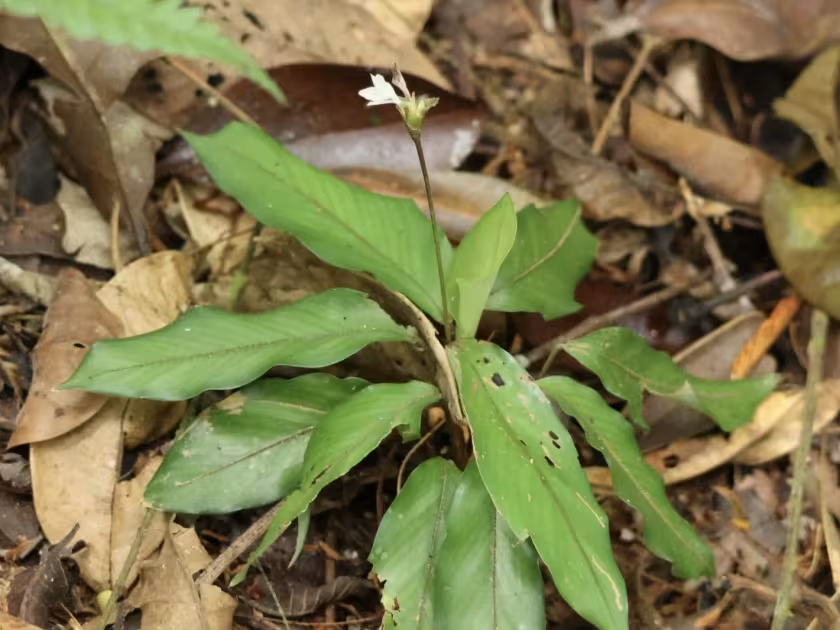
Description
Growing requirements
Goeppertia micans is an elegant perennial plant belonging to the Marantaceae family. Native to the tropical rainforests of Central and South America, it thrives in environments that mimic the filtered light and high humidity of the forest floor.
The culture requires a consistent climate with temperatures maintained between 20 and 25 degrees Celsius. It is highly sensitive to cold drafts and significant temperature drops, which can lead to leaf yellowing and a rapid decline in plant vitality.
For optimal growth, provide indirect or filtered light. Direct sunlight is detrimental to the foliage, causing irreversible burn marks. If indoor conditions are dim, supplemental LED lighting is recommended to maintain the plant's decorative appearance and growth rate.
The substrate must be well-draining, airy, and slightly acidic. A mix consisting of high-quality peat, perlite, and pine bark is ideal, as it allows for proper oxygen exchange while retaining sufficient moisture to prevent the root system from drying out completely.
Effective irrigation relies on maintaining uniform soil moisture. Avoid both waterlogging the soil and letting it dry out excessively. Using filtered or room-temperature water is critical, as mineral buildup or cold shock can harm the sensitive root structures.
Main diseases and pests
Spider mites are the most common pest for Goeppertia micans, especially in environments with low humidity levels. Regular leaf misting and occasional cleaning of leaf surfaces with a damp cloth help to prevent infestations and remove dust.
Fungal leaf spot diseases may occur if moisture persists on the leaves for too long or if the plant lacks proper ventilation. To manage this risk, ensure good airflow and apply organic or chemical fungicides if visible spots or spreading lesions appear.
Root rot is a major threat caused by overwatering or poor drainage. If the plant shows signs of wilting despite moist soil, check the roots for discoloration or mushy texture. Repotting into fresh, sterile soil is often necessary to save the plant.
Mealybugs are another potential threat, often colonizing the undersides of leaves and leaf axils. Physical removal with alcohol-soaked swabs combined with systemic insecticide treatments is usually effective in controlling these pests during early stages.
Nutrient deficiencies or chemical burns from synthetic fertilizers can cause leaf tip necrosis. Always use balanced fertilizers at half-strength during the growing season and leach the soil with plain water periodically to flush out excess mineral salts.