
Miltonidium
x Miltonidium hort.
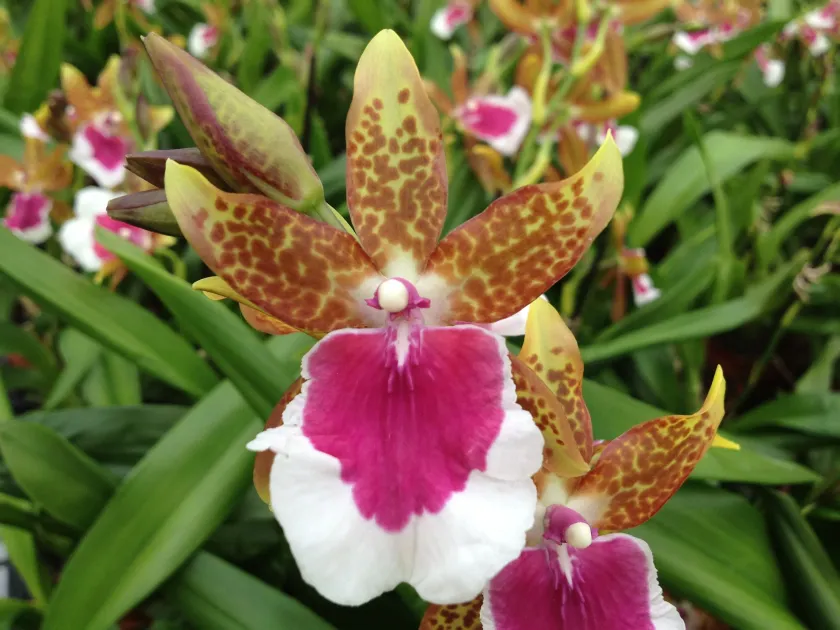
Description
Growing requirements
Miltonidium is a man-made intergeneric hybrid within the Orchidaceae family, resulting from the crossbreeding of Miltonia and Oncidium. It is highly valued for its striking, long-lasting floral sprays and unique, often colorful blooms.
As an epiphytic culture, it requires specific conditions that mimic its tropical heritage. It thrives in bright, indirect light, as direct sun exposure can quickly damage its sensitive foliage and dehydrate the plant.
The temperature requirement is moderate, preferring a range of 18–24 °C during the day. A slight temperature drop during the night is beneficial for metabolic processes and helps the orchid initiate the blooming phase efficiently.
The substrate must be highly porous, typically composed of conifer bark, charcoal, and sphagnum moss. This composition ensures that oxygen reaches the roots while maintaining enough moisture to support the pseudobulbs during growth.
Consistent watering is vital; the potting medium should be allowed to dry slightly between sessions. Overwatering is the most common mistake in orchid cultivation, as it prevents root aeration and leads to rapid decay.
Main diseases and pests
Common pests affecting this crop include spider mites, mealybugs, and scale insects, which often thrive in environments with poor air circulation or low humidity.
Root and stem rot caused by fungal or bacterial pathogens are frequent issues. Prevention involves using high-quality substrate and ensuring that the plant is not left sitting in stagnant water after watering.