
Maclellanara
x Maclellanara hort.
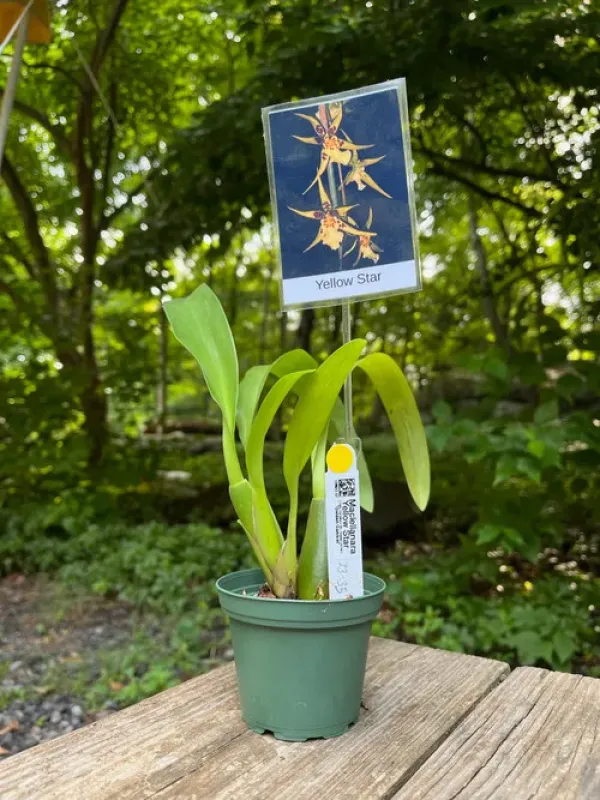
Description
Growing requirements
Maclellanara (x Maclellanara) is a sophisticated intergeneric orchid hybrid, resulting from the cross-breeding of Brassia, Odontoglossum, and Oncidium species. Belonging to the Orchidaceae family, it is prized for its long-lasting, architecturally unique star-shaped blooms.
These plants require bright, indirect light to thrive and produce flowers. Placing them near an east-facing window is generally ideal, as they need protection from the harsh midday sun, which can easily scorch their leaves and compromise their health.
The temperature should be kept in a moderate range, ideally between 18°C and 25°C. To ensure consistent flowering, the plant requires a distinct drop in temperature during the night, which mimics the natural conditions of their original tropical habitats.
A well-draining epiphytic substrate is essential for the root system's health. A mix of pine bark, perlite, and charcoal is recommended to ensure proper aeration and prevent moisture from lingering too long around the pseudobulbs.
Watering should be managed by checking the substrate dryness. It is best to soak the pot in a container of lukewarm, filtered water for about 15 minutes, allowing excess moisture to drain completely, which prevents root rot and keeps the plant vigorous.
Main diseases and pests
The most common pests affecting Maclellanara include mealybugs, aphids, and spider mites. These small insects thrive in dry environments and can quickly damage the foliage, so maintaining appropriate humidity levels is an effective preventative measure.
Fungal infections, such as black rot or leaf spot, often arise due to poor air circulation or overwatering. Maintaining good hygiene by removing damaged leaves and ensuring the plant has enough airflow around its base is critical for long-term survival.