
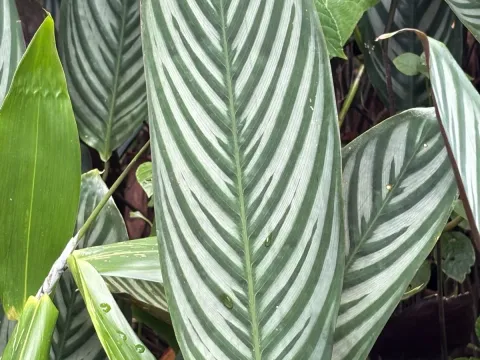
Ctenanthe
Ctenanthe
Ctenanthe is a perennial herbaceous plant belonging to the Marantaceae family. Native to the humid tropical forests of Central and South America, it is widely recognized for its diverse foliage patterns and its distinct ability to exhibit nyctinasty, moving its leaves in response to diurnal light cycles.
What the section contains


Ctenanthe
Botanically, the plant develops from rhizomes and forms dense rosettes. The leaves are characterized by a leathery texture and unique color variations, ranging from deep green to silver and purple hues, which serve as an adaptation to low-light conditions on the rainforest floor.
The climate requirements for Ctenanthe necessitate high humidity levels, ideally above 60 percent. The plant thrives in stable temperatures between 20 and 25 degrees Celsius and must be protected from sudden cold drafts which can induce tissue damage and leaf chlorosis.
Soil management for this culture requires a well-draining, slightly acidic medium. A blend consisting of peat moss, perlite, and pine bark is typically recommended to maintain sufficient aeration for the root system while preventing water stagnation at the crown.
Optimal light exposure involves bright, indirect illumination. Direct solar radiation can severely scorch the leaf margins and cause the vibrant patterns to fade, eventually reducing the overall photosynthetic capacity of the plant and its ornamental value.
Spider mites are the most common pest associated with Ctenanthe, particularly in environments with low air humidity. These mites colonize the underside of leaves, causing yellow stippling and eventual leaf drop if left unmanaged.
Mealybugs can also infest the plant, settling in the leaf axils and restricting the growth of new foliage. Regular inspection of the plant's structure is essential to identify early signs of infestation and prevent colonization of neighboring specimens.
Fungal pathogens, such as those causing root rot, frequently occur due to overwatering or the use of poorly draining substrate. These conditions facilitate the growth of opportunistic bacteria that compromise the root system's ability to absorb water and nutrients.
Control strategies for threats include the use of horticultural oils for pest management and strict adherence to irrigation protocols. Keeping the foliage clean and maintaining adequate ventilation are key to reducing the risk of fungal outbreaks.
If chemical intervention is required, systemic insecticides or fungicides should be applied carefully to avoid phytotoxicity. Proper sanitation and the prompt removal of infected leaves remain the most effective methods for maintaining the long-term health of the crop.