
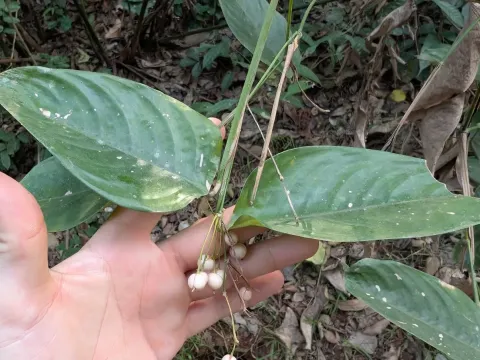
Marantochloa
Marantochloa
Marantochloa is a genus of perennial herbaceous plants belonging to the Marantaceae family, native to tropical Africa. In agricultural systems, propagation is primarily achieved through rhizome division, which is the most reliable method for establishing uniform and productive stands in plantation settings.
What the section contains


Marantochloa
Planting typically occurs at the onset of the rainy season to ensure that young plants have sufficient soil moisture to establish their root systems effectively. Preparing the site with organic amendments before planting significantly boosts the survival rate and initial growth vigor of the Marantochloa rhizomes.
The plant thrives in shaded environments, such as forest understories or integrated agroforestry systems. Exposure to excessive direct sunlight can stress the plants and cause the leaves to become tough and brittle, which diminishes their value as a flexible and durable packaging material.
Marantochloa requires fertile, well-draining soils with high organic matter content to support its lush leaf development. Sustaining consistent moisture levels is vital, as the plant lacks effective mechanisms to withstand prolonged dry spells, making irrigation or strategic mulching essential in drier periods.
Temperature stability is crucial for optimal growth, as the plant is sensitive to thermal fluctuations typical of non-equatorial climates. By replicating the humid and stable environment of tropical forests, farmers can maximize the output of high-quality, pliable leaves throughout the growing season.
The primary economic value of Marantochloa lies in its large, durable leaves, which are widely utilized as traditional, biodegradable food packaging. This sustainable alternative to synthetic materials remains highly relevant in local markets for wrapping various food items and ready-to-eat dishes.
Besides packaging, the plant serves as a ground cover in agroforestry systems, contributing to soil moisture retention and erosion control. Efficient leaf production is sustained through disciplined harvesting practices that focus on leaf removal without damaging the plant's central growth buds.
Productivity is measured by the number of harvestable leaves per unit area, with well-managed stands providing consistent yields for several consecutive years. Proper maintenance and regular removal of senescent leaves further stimulate the production of fresh, commercially viable foliage.
Marantochloa is generally robust, but dense plantings combined with high humidity can create environments conducive to fungal outbreaks. These pathogens typically manifest as leaf spots, which compromise the quality of the foliage and reduce its marketability.
Pest management focuses on maintaining adequate spacing to ensure airflow and preventing water stagnation in the root zone. Regular monitoring of the foliage for early signs of infestation allows for targeted interventions, keeping the crop healthy and productive without excessive chemical inputs.
Harvesting is performed manually throughout the growing season, with farmers selectively choosing only the most mature and unblemished leaves. This careful, selective approach preserves the integrity of the plant and ensures its longevity within the agricultural system.