
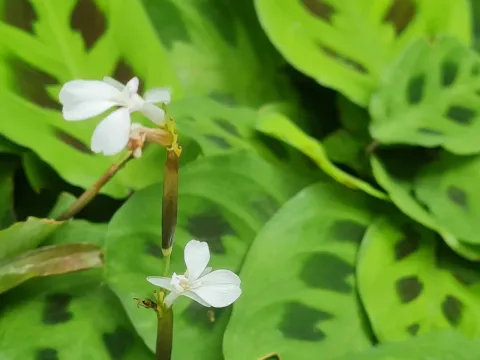
Arrowroot
Maranta L.
Commercial cultivation of arrowroot is performed through vegetative propagation by dividing healthy rhizomes, ensuring the preservation of high-yielding plant characteristics.
What the section contains


Arrowroot
The optimal planting time aligns with the onset of the rainy season to provide sufficient soil moisture required for rapid establishment and root development.
Rhizome fragments are planted at a depth of 5 to 10 centimeters, maintaining specific spacing to ensure optimal nutrient access and root room for every plant.
Prior to planting, soil must be deep-plowed and enriched with organic matter to ensure the loose structure necessary for rhizome expansion.
Only disease-free, vigorous rhizome sections should be selected for planting, as they are the primary determinants of the future plantation's success.
Arrowroot is a member of the Marantaceae family, which thrives in hot and humid tropical climates, typically requiring temperatures between 22 and 28 degrees Celsius.
This crop has strict requirements for consistent soil and air moisture; prolonged drought can significantly impair growth and reduce starch accumulation.
Well-drained, fertile soils with a slightly acidic pH are ideal, as they prevent waterlogging while supporting the intense biological activity needed for rhizome development.
The plants prefer partial or filtered shade; exposure to harsh, direct sunlight can damage leaves and inhibit the physiological processes that lead to starch production.
Adequate ventilation and proper spatial arrangement are essential to maintain the microclimate conditions necessary for the plant to reach its full productive potential.
The yield of arrowroot depends on the length of the growing cycle, which typically ranges from 10 to 12 months until the rhizomes reach full maturity.
Arrowroot is primarily valued for its high-quality, easily digestible starch, which is highly sought after in the food and pharmaceutical industries.
To achieve high yields, farmers must maintain soil fertility through proper fertilization programs and ensure consistent moisture levels throughout the development cycle.
After harvesting, the rhizomes undergo a multi-stage processing routine, including washing, crushing, and extraction to isolate the pure starch component.
The efficiency of the extraction process directly impacts the overall profit margins, making harvest timing and rhizome quality critical factors for producers.
Root rots caused by excessive moisture and poor soil drainage are the most significant threats to arrowroot plantations, often leading to total crop failure if unmanaged.
Pests such as spider mites and scale insects can infest the foliage, particularly during dry spells, causing leaf yellowing and reducing photosynthetic activity.
- Root rot (Phytophthora, Pythium).
- Spider mites (Tetranychus urticae).
- Mealybugs.
- Bacterial leaf spot diseases.
Preventative strategies, including crop rotation and the use of healthy, treated planting stock, are vital for maintaining the health of the field.
Integrated pest management, including regular monitoring and timely application of bio-controls, helps minimize losses without compromising crop quality.
Harvesting commences when the above-ground foliage begins to yellow and wither, which is a reliable indicator that the rhizomes have matured.
Rhizomes are carefully excavated to avoid physical damage, as bruised or broken roots are susceptible to rapid decay before they can be processed.
Once harvested, the rhizomes must be cleaned of soil and debris immediately, as organic contamination can significantly diminish the quality of the starch.
Quick transportation from the field to the processing facility is necessary to ensure the starch is extracted before the harvested rhizomes begin to ferment.
Efficiency in the post-harvest period is crucial, as the chemical composition of the rhizomes changes rapidly once they are removed from the soil.