
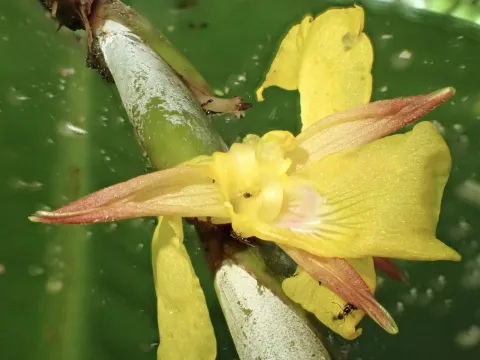
Ischnosiphon
Ischnosiphon
Propagation of Ischnosiphon in natural habitats and controlled environments is primarily achieved through vegetative methods, such as rhizome division. The optimal time for planting new divisions coincides with the beginning of the rainy season when soil and air humidity levels promote rooting.
What the section contains

Ischnosiphon
Seed sowing is less common due to their specific germination requirements, which demand constant high temperatures and substrate moisture. In professional cultivation, it is crucial to provide a well-drained soil mix that prevents seedling rot during the early developmental stages.
Preparing the planting site requires thorough weeding to prevent weed competition, which can suppress the slow-growing Ischnosiphon seedlings. It is recommended to incorporate organic fertilizers into the soil to improve structure and enrich it with essential nutrients during the active growth phase.
Planting density depends on the intended end-use: for high-quality cane production, spacing is narrowed to encourage stem elongation. However, it remains essential to maintain enough distance to ensure adequate air circulation between specimens, which helps prevent fungal diseases.
In commercial operations, maintaining a stable temperature between 22–28 degrees Celsius is vital, as sudden temperature fluctuations can negatively impact growth rates and the quality of the harvested cane or fiber.
Ischnosiphon belongs to the Marantaceae family and naturally occurs in the humid tropical forests of Central and South America. The crop is highly demanding regarding air humidity, which should consistently remain above 70–80 percent for optimal development.
Successful growth requires fertile, well-aerated loamy or sandy soils with a moderately acidic pH. Waterlogging in the root system is unacceptable, making high-quality drainage or planting on elevated beds a critical agronomic necessity for this species.
The light regime for Ischnosiphon is characterized by a need for dappled or diffused light; direct sunlight can cause scorching on the leaf blades and lead to premature stem desiccation. Ideally, the plants should be cultivated under the light shade of taller trees or artificial canopy structures.
Agronomic management requires regular irrigation to prevent the soil from drying out, as the plant lacks effective mechanisms to survive prolonged drought. During hotter seasons, soil mulching is highly recommended to retain moisture in the root zone.
The plant is highly sensitive to abrupt climate shifts, which is why in regions with distinct seasonal changes, specialized greenhouse environments with automated misting systems are required to ensure consistent productivity.
The yield of Ischnosiphon is measured by the biomass of canes suitable for weaving, collected from a specific area during a vegetation cycle. Under optimal conditions, the plant is capable of forming multiple long, durable, and flexible shoots suitable for artisanal processing.
Biomass growth rates depend directly on the regularity of fertilizer applications, specifically those containing balanced ratios of nitrogen, phosphorus, and potassium. With proper care, the plant can produce fully developed stems reaching several meters in length within a single season.
The economic yield of raw material varies depending on the age of the plantation; the most intense growth is observed in young plants aged between two and four years. After this period, bush productivity may decline, necessitating plantation renewal or rejuvenation.
Harvesting efficiency depends on the precision of stem removal: cuts must be made at the base without damaging the rhizome or vegetative buds. Proper harvesting techniques ensure long-term plantation productivity without the need for annual replanting.
The quality of the harvest is determined by fiber elasticity, which is assessed during the technical maturity stage of the shoots. Immature or over-mature stems lose their structural properties, which significantly reduces the market value of the final craft products.
The primary threats to Ischnosiphon plantations are fungal pathogens that flourish in conditions of excessive humidity and poor air circulation. Leaf spot diseases are among the most dangerous and can lead to the death of the entire above-ground part of the plant if left untreated.
Pests, such as spider mites and mealybugs, often infest the crop during periods of temporary moisture deficit. These pests feed on cellular sap, weakening the plant's immune system and making it susceptible to secondary infections.
Caterpillar infestations can lead to severe damage to the leaf mass, reducing photosynthetic activity and consequently slowing stem growth. Regular monitoring of the plantation is recommended for the early detection and management of infection hotspots.
Soil-borne nematodes can attack the root system, hindering nutrient uptake. This manifests as chlorosis, stunted growth, and general bush degradation, often requiring a complete replacement of the growing medium in the affected area.
To prevent disease spread, it is crucial to follow crop rotation practices and avoid excessive plant density. The use of biological control agents is the preferred method of protection, given the sensitivity of Marantaceae to many synthetic chemical fungicides.
Harvesting Ischnosiphon is a labor-intensive process requiring a selective approach for every plant. The harvest is performed when the shoots reach maximum strength while still retaining the flexibility required for weaving tasks.
Once cut, the stems undergo primary processing on-site, including leaf removal and the stripping of outer scales. It is essential to remove all defective fragments immediately to prevent the contamination of high-quality material during storage or drying.
Following harvest, the cane is subjected to short-term heat treatment or specific shade-drying to fix the elastic properties of the fibers. Prolonged direct sunlight exposure on freshly cut material is strictly prohibited, as it renders the fibers brittle and unusable.
Material sorting is based on length, thickness, and flexibility, which dictates the final use case—from small basket weaving to the production of larger furniture items. Each category of raw material requires specific storage conditions in a dry, well-ventilated space.
Correctly harvested and dried Ischnosiphon material exhibits high durability and resistance to mechanical deformation. This makes the crop a valuable economic resource for indigenous communities and local artisanal industries in tropical regions.