
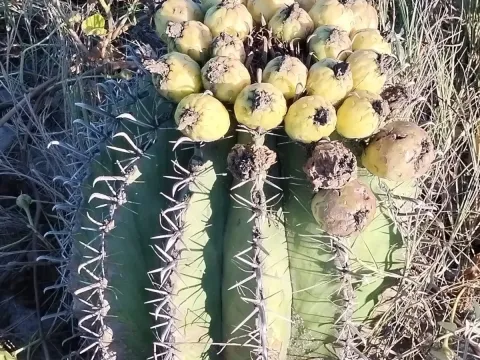
Herrera's Ferocactus
Ferocactus herrerae
Sowing seeds of Ferocactus herrerae is best performed during the spring months when natural light levels start to increase significantly. Maintaining a steady temperature between 22 and 25 degrees Celsius is crucial for germination.
What the section contains
Herrera's Ferocactus
Use a sterile, well-draining substrate mix consisting of fine sand and peat moss. The seeds should be sown on the surface and barely covered, ensuring they receive enough light to initiate the germination process.
Keeping the humidity constant during the first few weeks is essential. Containers should be kept covered with clear plastic or glass until the seedlings emerge, after which gradual ventilation is required.
Seedlings are slow-growing and require minimal disturbance during their first year of life. Careful monitoring for signs of damping-off is necessary, and if noticed, fungicide treatment should be applied immediately.
Once the seedlings develop their first spines, they can be gradually exposed to drier conditions. This hardening-off process is vital for their long-term survival and transition to adult cultivation.
Ferocactus herrerae is a species native to the arid landscapes of Sonora, Mexico. It thrives in environments with intense, direct sunlight, which is necessary to maintain its compact and robust growth habit.
The ideal soil composition should be highly porous, consisting of coarse sand, perlite, and a small amount of organic material. Excellent drainage is non-negotiable to prevent moisture retention near the roots.
During the active growing season, water the plant thoroughly but allow the substrate to dry out completely between applications. Over-watering is the most common cause of failure in cultivating this species.
Winter dormancy is essential for this plant. During this period, the cactus should be kept in a cool, dry environment with temperatures around 10–12 degrees Celsius to ensure proper health and future flowering.
Good air circulation is highly recommended for all Ferocactus species. This reduces the likelihood of humidity-related issues and helps the plant maintain a strong, healthy epidermis.
Root rot caused by stagnant water is the primary threat to the health of Ferocactus herrerae. This condition often results from a combination of poor drainage and incorrect watering frequency.
Red spider mites are a common pest in indoor environments with low humidity. They feed on the plant surface, often leaving discolored, necrotic spots that can permanently affect the appearance of the cactus.
Mealybugs are also prevalent, often nesting in the protected areas between the ribs of the plant. Regular inspection is necessary to catch and treat these infestations before they become overwhelming.
Preventive measures include keeping the greenhouse or windowsill clean and avoiding the introduction of infected new plants into the existing collection. Quarantining new acquisitions is a standard safety practice.
Using systemic insecticides or miticides can control infestations, but care must be taken to apply them correctly according to the plant's delicate tissues. Always avoid excessive chemical usage to prevent phytotoxicity.