
Ferocactus macrodiscus
Ferocactus macrodiscus
Description
Sowing dates
Propagation of Ferocactus macrodiscus is typically achieved through seeds, which require specific conditions to germinate successfully. The ideal time for sowing is during the spring months when temperatures are consistently warm.
The substrate used for sowing must be inorganic and well-draining, such as a mix of pumice and grit. Seeds should be placed on the surface and pressed lightly without burying them deep.
Maintaining a humidity level of about 80% under a cover is essential for the first few weeks. Careful ventilation must be provided to prevent dampening-off caused by fungi.
Seedlings grow at a slow rate and require plenty of bright, indirect light to develop strong spines. Direct sunlight should be avoided during the initial germination phase.
Once the seedlings are about a year old, they can be gradually hardened off to withstand lower humidity levels and stronger lighting conditions.
Growing requirements
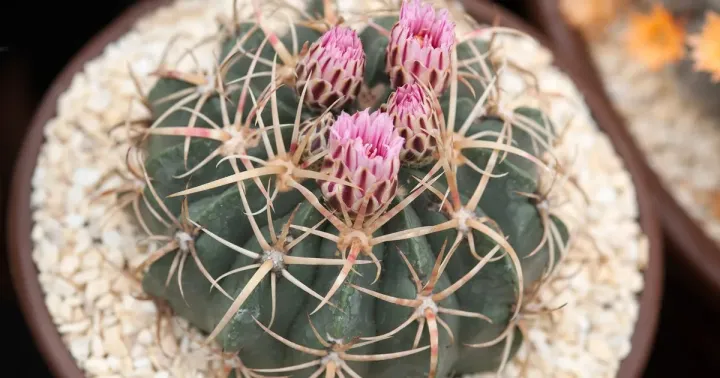
Ferocactus macrodiscus is a distinctive species within the Cactaceae family, known for its flattened, disk-like shape that matures into a more spherical or columnar structure.
Native to central Mexico, this species thrives in arid environments. It requires a sunny position, ideally full sun, to maintain its compact growth and healthy spine production.
The soil should be highly porous, containing a significant proportion of mineral materials. Good drainage is non-negotiable, as the root system is highly sensitive to moisture.
During the growing season, watering should be thorough but infrequent, allowing the soil to dry out completely between sessions. During winter, the plant enters dormancy and requires cool, dry conditions.
Regular monitoring of the soil moisture and light intensity is critical. Over-fertilization should be avoided, as it can lead to soft, succulent growth that is susceptible to collapse.
Main diseases and pests
The primary threats to this cactus include root rot and stem rot, which occur when moisture remains trapped around the plant base for extended periods. This is often fatal.
Spider mites are common pests that thrive in hot, dry conditions. They leave fine webbing and pale spots on the skin, which can permanently scar the cactus body.
Mealybugs, especially root mealybugs, are persistent pests that hide in the root zone. Their presence is often indicated by white, cotton-like masses and poor plant growth.
Environmental stress, such as sudden shifts in temperature or lack of proper ventilation, can weaken the plant's natural defenses, making it more prone to infestations.
To maintain plant health, all suspected pests should be treated immediately with appropriate systemic insecticides or targeted organic treatments to prevent spreading to other plants.