
Espostoa mirabilis
Espostoa mirabilis
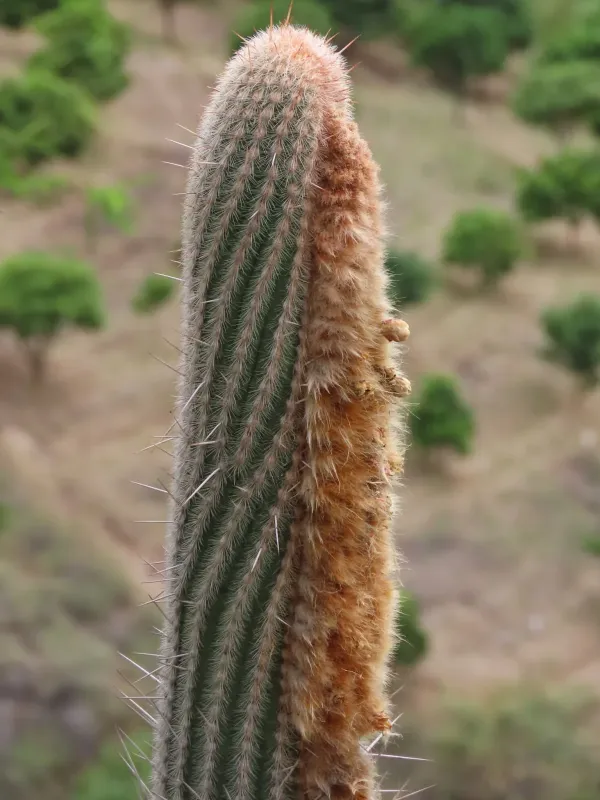
Description
Sowing dates
Propagation of Espostoa mirabilis is typically achieved through seeds or by rooting lateral offsets. Sowing should be carried out in spring at a temperature of approximately 22–25 degrees Celsius to ensure successful germination.
Seeds are sown in a sterile, well-draining substrate composed of sand and peat, maintaining consistent moisture levels and providing diffused light. Proper ventilation is essential during the early stages to prevent damping-off disease.
Cuttings are taken during the summer months, with the wound allowed to callus for several days before planting. Once the callus forms, the cuttings are placed into a dry sandy medium to stimulate root development.
Seedlings require a gradual acclimatization process to move from shade to brighter conditions as they mature. Young plants demonstrate their most vigorous growth phases within the first five years of development.
Repotting for young specimens should be done annually in the spring before the active growth season begins. Mature plants generally require less frequent repotting, only when the root system has fully filled the container.
Growing requirements
Espostoa mirabilis belongs to the Cactaceae family and originates from the mountainous regions of Peru. It is a highly adapted species capable of thriving in high-sunlight environments with significant temperature fluctuations.
For successful growth, provide the plant with maximum sunlight, preferably direct morning and evening light. Inadequate lighting conditions often lead to etiolation, where the stem stretches and loses its characteristic dense white hair.
The soil mixture must be highly porous and inorganic to prevent water accumulation near the roots. A balanced blend of mineral soil, coarse sand, and gravel is recommended for optimal drainage and root health.
Maintain summer temperatures between 25–30 degrees Celsius, while providing a winter rest period with temperatures between 10–15 degrees. Avoid cold drafts and ensure the plant is kept dry during the cooler dormant months.
Watering should be moderate, allowing the soil to dry out completely between sessions to avoid root rot. During winter, watering should be significantly reduced or suspended entirely to mirror the plant's natural dormant cycle.
Main diseases and pests
The primary threats to this species include root and stem rots caused by excessive humidity and poorly aerated substrates. Proper drainage management is the most effective preventative measure against these infections.
Common pests include mealybugs and spider mites, which often hide within the dense woolly hairs of the plant. Their presence can be difficult to detect until a significant infestation has developed.
Mealybugs feed on the sap of the cactus and are identified by their white, cotton-like secretions on the stem. Systemic insecticides are recommended for effective control, as they are absorbed by the plant and target the pests directly.
Spider mites cause damage to the plant's epidermis, resulting in unsightly yellow or brown spotting. Targeted application of acaricides is necessary to manage these pests and protect the aesthetic value of the plant.
Consistent monitoring and maintaining a clean, well-ventilated growing environment are crucial for disease prevention. Regular inspection allows for the early detection and management of potential pest issues before they spread.