
Ferocactus hamatacanthus
Ferocactus hamatacanthus
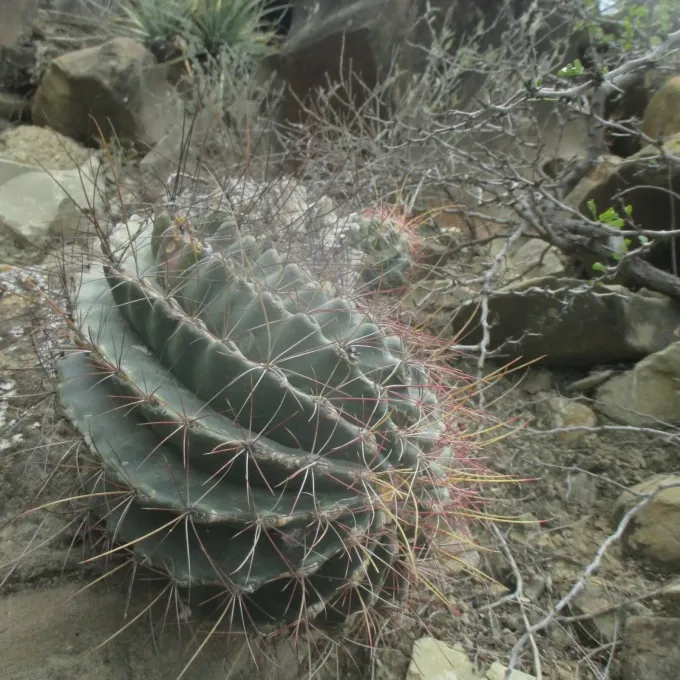
Description
Sowing dates
Sowing seeds of Ferocactus hamatacanthus is best performed in early spring to take advantage of the lengthening daylight hours. This timing allows young seedlings to gain strength before the potentially harsh conditions of summer or winter.
The seeds should be planted in a mineral-rich, porous substrate that promotes rapid drainage. A mixture of fine gravel, perlite, and coarse sand provides the necessary structure for delicate roots to thrive.
Temperature control during the germination phase is critical, requiring a consistent range of 22 to 25 degrees Celsius. A mini-greenhouse setup or a plastic cover helps maintain the high humidity required for successful germination.
Once seedlings emerge, they require careful monitoring. The cover should be gradually removed to harden the plants, ensuring that the soil surface remains just slightly damp rather than waterlogged.
Seed propagation is the most reliable method for this species, as vegetative propagation is not common. Young plants should remain in their nursery pots until they are robust enough to withstand the stress of repotting.
Growing requirements
Native to the arid landscapes of Northern Mexico and Southern Texas, Ferocactus hamatacanthus is a hardy species belonging to the Cactaceae family. Its evolutionary history has perfectly adapted it to intense sunlight and drought.
The ideal soil profile is highly inorganic, ensuring that water passes through quickly. Growers should avoid rich potting soils, which hold too much water and can lead to the death of the specimen due to rot.
Full sun exposure is mandatory for healthy development. Without sufficient light, the plant will become etiolated, losing its characteristic barrel shape and vibrant spine coloration. South-facing windows or greenhouse conditions are optimal.
Watering frequency depends heavily on the season. During the active growing period in summer, the plant benefits from a deep soak whenever the soil dries completely. In winter, the plant enters dormancy and requires near-zero watering.
Proper aeration is essential for this species. Even in indoor settings, keeping the air circulating around the cactus prevents moisture from building up on the epidermis, which is a major precursor to fungal attacks.
Main diseases and pests
The primary threat to Ferocactus hamatacanthus is overwatering, which manifests as rot at the base of the stem. Once rot sets in, it is often difficult to save the plant, making prevention the best strategy.
Pests like mealybugs and spider mites thrive in the crevices between the sharp spines. These pests are often invisible at early stages, so growers should inspect their plants monthly using a magnifying glass.
Fungal infections can occur if the cactus is kept in high-humidity areas with low light. These infections present as soft, dark spots on the skin of the plant, often requiring aggressive treatment with fungicides.
Physical damage to the skin, such as scratches or punctures, creates entry points for bacteria. Careful handling of the plant, especially when moving it, is recommended to keep the surface intact.
Root rot is often exacerbated by soil that has become too compacted over time. Periodic repotting into fresh, airy substrate is necessary to maintain the long-term health of the root system and ensure proper oxygen exchange.