
Ferocactus townsendianus
Ferocactus townsendianus
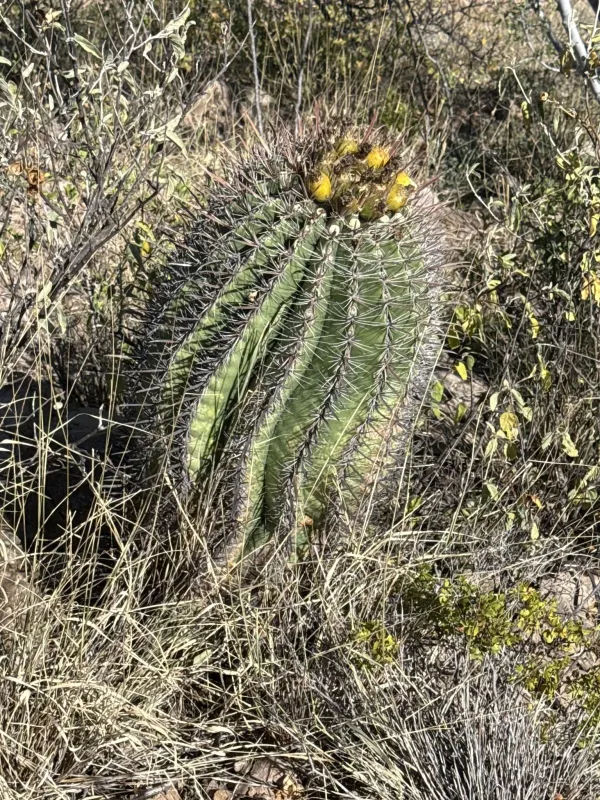
Description
Sowing dates
Sowing seeds of Ferocactus townsendianus is best performed in the spring, allowing the seedlings to utilize the natural increase in day length for steady growth during their first months.
The growing medium for germination must be extremely well-draining, consisting primarily of fine grit or pumice mixed with a small amount of sterilized potting compost.
Maintaining a consistent temperature between 22 and 26 degrees Celsius is essential for high germination rates, while the soil surface should be kept consistently moist but not saturated.
Once seedlings emerge, they should be introduced to fresh air gradually to prevent etiolation and to build resilience against fungal pathogens common in moist conditions.
It is recommended to keep seedlings in a dedicated tray for at least one year before individual potting to ensure they have developed a robust root system capable of independent growth.
Growing requirements
Ferocactus townsendianus, a member of the Cactaceae family, is a slow-growing barrel cactus native to the arid regions of Baja California, known for its formidable radial spines.
This species demands intense solar exposure to maintain its characteristic dense, cylindrical shape; inadequate light levels will cause the plant to stretch and lose its structural integrity.
The potting mix should be predominantly mineral, avoiding high peat content which can cause water retention issues and lead to the degradation of the delicate root tissues.
During the active growth phase, watering should be thorough but intermittent, ensuring that the substrate dries completely between sessions to mimic the natural desert cycle.
Winter care requires a strictly dry state coupled with cooler temperatures, which helps induce the plant's metabolic dormancy and encourages stronger growth in the following season.
Main diseases and pests
Root mealybugs pose a significant threat to this species, as they often feed on the roots unnoticed, slowly sapping the plant's vitality and causing stunted growth.
Fungal rots are the most common cause of failure in cultivation, typically triggered by an unsuitable soil structure or overwatering during periods of low light or low temperature.
Spider mites can occasionally infest the areoles, causing unsightly scarring and tissue damage if the ambient air is kept too dry for an extended period without ventilation.
Preventative measures include using systemic insecticides during the growing season and ensuring proper airflow around the plant to discourage the development of mold and mites.
Early identification of pest infestations is crucial; regular inspection of the base of the cactus and the soil surface helps detect problems before they become critical.