
Golden prickly pear
Opuntia aurea
Description
Growing requirements
Golden prickly pear (Opuntia aurea) is a perennial succulent species within the Cactaceae family. Originating from the arid regions of Utah, USA, this species is increasingly recognized as a resilient crop suitable for specialized agricultural systems.
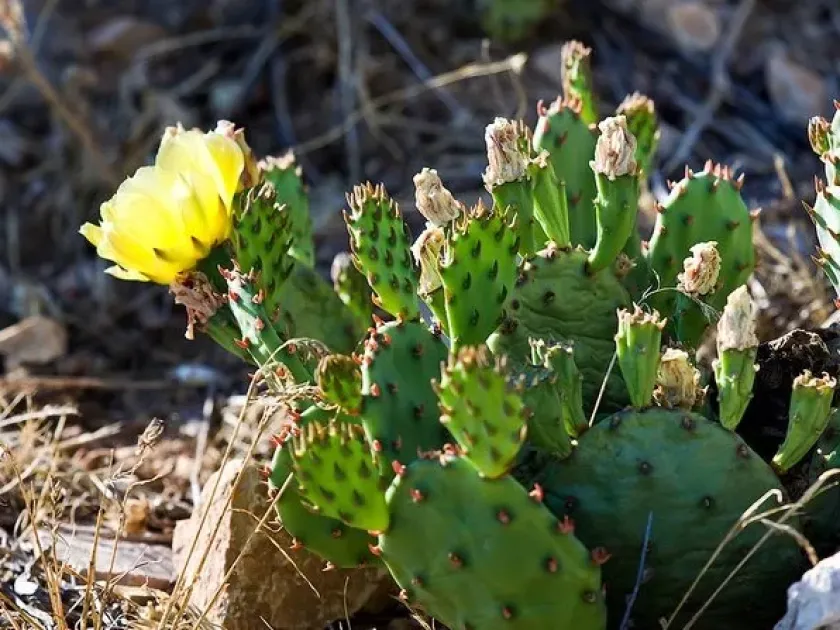
Botanically, the plant is characterized by its flattened stem segments and high tolerance for temperature fluctuations. It exhibits a slow-growth habit, which is compensated by its exceptional ability to withstand prolonged drought periods.
Climate requirements for this culture include high levels of solar radiation and low relative humidity. It is best adapted to regions where summer temperatures are high and winters are characterized by cold, dry conditions rather than wet, freezing ones.
Soil management is critical for the success of Opuntia aurea. The plant requires mineral-rich but extremely well-drained soils; heavy clay or waterlogged soils are unsuitable and will likely lead to rapid plant mortality due to root rot.
Agronomic practices focus on minimal intervention. Once established, the culture requires very little irrigation, making it a sustainable choice for water-scarce agricultural environments. Weed management around the base of the plant is necessary during the early stages of establishment.
Yield
The agricultural utility of the golden prickly pear includes both fruit production and the use of young stem segments (nopales). Although initial growth is slow, the plant provides a consistent yield of nutritious, antioxidant-rich produce once the crop matures.
Strategic planting densities can optimize the output per hectare. Harvesting should be performed with caution, focusing on the selection of ripe fruits that meet the quality standards for fresh market distribution or processing.
Main diseases and pests
Pest management primarily involves monitoring for scale insects and spider mites, which can cause significant damage to the dermal tissue of the stems. Early identification is vital to prevent infestations from spreading across the crop.
Disease pressure is almost exclusively related to excess humidity. Fungal pathogens that cause stem and root rot thrive in poorly drained environments, emphasizing the necessity of maintaining optimal soil aeration throughout the growing cycle.
Harvesting
Harvesting is performed manually during the peak of the ripening season. Workers must utilize thick gloves to handle the fruit and pads, as the presence of glochids (tiny spines) poses a mechanical challenge during collection and sorting processes.