
Golden-spined prickly pear
Opuntia aureispina
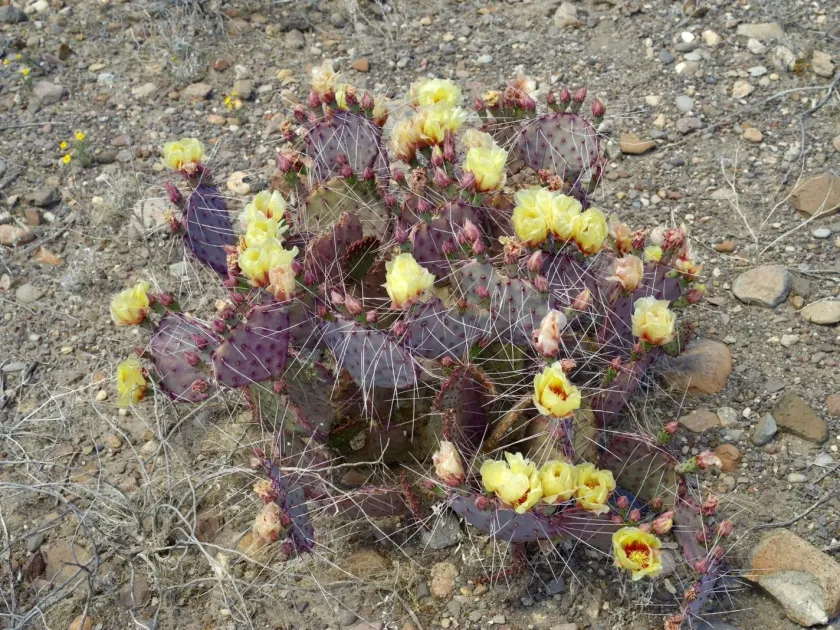
Description
Sowing dates
Opuntia aureispina belongs to the Cactaceae family. In agricultural and horticultural practices, vegetative propagation using individual stem segments (cladodes) is the most reliable method for maintaining species characteristics.
Selected cuttings must be left in a dry, shaded place for several days to allow the cut surface to callus over, which is essential to prevent rot when the segment is placed in the growing medium.
Propagation by seeds is possible but requires a strictly controlled environment with temperatures between 20–25 degrees Celsius and high humidity to ensure successful germination and seedling development.
The best time for planting is the spring season, when natural light levels increase, providing the necessary energy for rapid root formation and the subsequent growth of new stem segments.
When planting, avoid burying the segment too deeply in the substrate; it should be securely supported but remain primarily above the soil surface to minimize the risk of bacterial and fungal infections.
Growing requirements
As a desert-originating plant, the golden-spined prickly pear requires full, intense sunlight to maintain its structural integrity and promote the characteristic golden coloration of its spines.
The soil must be extremely well-draining, consisting of a mix of coarse sand, perlite, and gravel to ensure that water does not accumulate around the root system, which is a major cause of failure.
Temperatures should generally range from 22 to 30 degrees Celsius during the active growing season, with the plant capable of enduring significant temperature drops that mimic its natural habitat.
Proper air circulation is critical in greenhouses or nursery settings to prevent the buildup of stagnant humidity, which can lead to superficial infections on the cactus pads.
Watering should be rhythmic and sparse; the substrate must be allowed to dry out completely between irrigation cycles to prevent the degradation of the delicate root hairs.
Yield
The primary use of Opuntia aureispina is in ornamental gardening and xeriscaping, where its striking golden spines and vibrant flowers provide high aesthetic value to arid landscapes.
In large-scale plantings, it serves as an effective natural barrier or security hedge due to its robust and sharp spines, which deter livestock and unwanted entry into restricted areas.
Some growers explore the cultivation of this species for botanical research and the production of cactus biomass, which can be processed for specific horticultural or chemical applications.
Agrotourism and specialty cactus nurseries derive economic benefit from the aesthetic appeal of the plants, often supplying collectors and botanical gardens with mature specimens.
Yield, defined as biomass production and flower count, is enhanced by balanced fertilization containing phosphorus and potassium, applied sparingly during the peak growth months.
Main diseases and pests
Root rot is the most devastating disease affecting this species, usually caused by poor soil drainage, over-irrigation, or the lack of a proper winter dormancy period.
Mealybugs are common pests that colonize the crevices between pads, causing significant damage by extracting sap and weakening the plant's structural health.
Spider mites can become a major concern in dry conditions, causing mottled yellowing and dehydration of the skin, which eventually leads to stunted growth if left untreated.
Scale insects present a challenge due to their protective coverings, requiring precise and timely application of systemic insecticides to manage their population effectively.
Effective management includes regular monitoring, the use of systemic pest control products, and the prompt removal of infected plant parts to prevent the spread of pathogens throughout the nursery.