
Ferocactus haematacanthus
Ferocactus haematacanthus
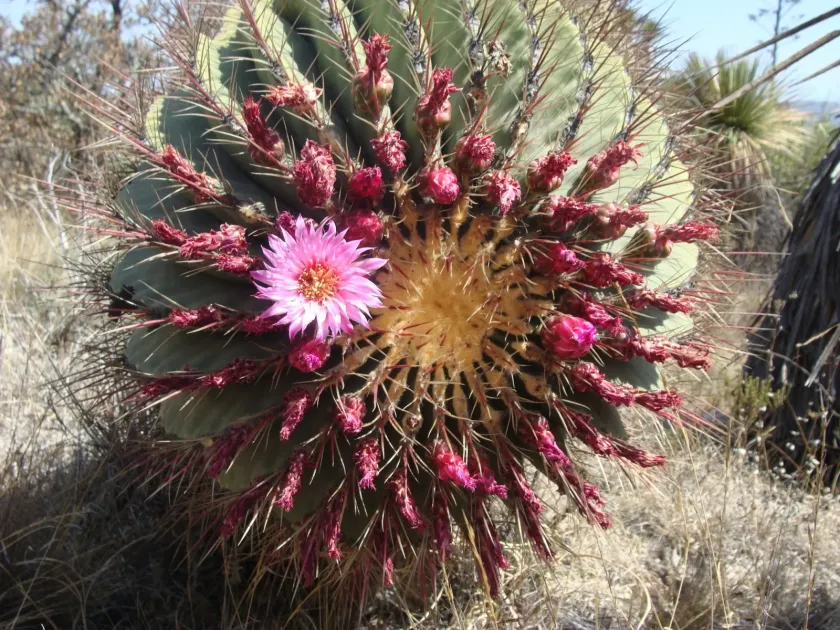
Description
Sowing dates
Ferocactus haematacanthus is a prominent species within the Cactaceae family, primarily propagated through seeds to maintain the genetic diversity of the cultivar.
Sowing should be executed during the spring months, taking advantage of increasing daylight hours to stimulate germination and early seedling development.
A sterile, highly porous substrate consisting of coarse sand, perlite, and a small fraction of loam is essential to prevent moisture retention at the seedling stage.
Optimal temperature for germination remains between 22 and 26 degrees Celsius, coupled with consistent, though not excessive, moisture levels.
Once germination is successful, the seedlings require gradual hardening to avoid photo-inhibition caused by immediate exposure to direct, high-intensity sunlight.
Growing requirements
As a native of Mexican arid zones, this species requires a location with high irradiance to maintain its compact growth form and intense spine coloration.
The root system demands a mineral-heavy substrate, ensuring that water drains quickly, thereby mimicking the natural rocky slopes of its native habitat.
During the dormant winter season, the plant requires a total cessation of watering and cooler temperatures to prepare for the spring vegetative phase.
Fertilization should be limited to the growth period, utilizing low-nitrogen, high-potassium formulas that promote healthy cell structure rather than succulent overgrowth.
Air circulation is a critical environmental factor, as stagnant, humid air often leads to physiological stress and increased susceptibility to opportunistic infections.
Main diseases and pests
Root rot, often caused by overwatering or poor drainage, remains the most significant threat to the survival of adult specimens in cultivation.
Mealybugs and spider mites are the primary pests that colonize the spine clusters, often remaining undetected until the damage to the epidermis is significant.
Preventative measures include regular manual inspection of the spine base and the application of systemic pesticides if an infestation is observed.
Fungal infections can quickly destroy the plant’s core; therefore, maintaining a dry environment during dormancy is the most effective biological defense.
Any physical injury to the epidermis should be treated with charcoal powder or sulfur to prevent rot from entering the plant’s internal tissue.