
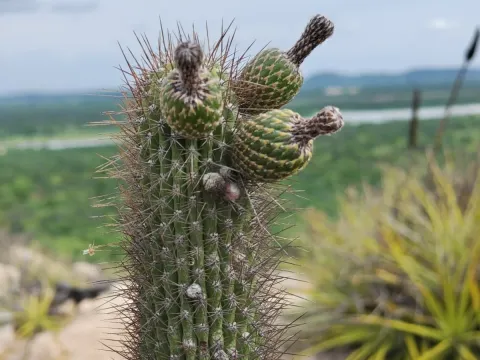
Facheiroa
Facheiroa
Facheiroa is a genus of cacti belonging to the Cactaceae family, native to the arid caatinga regions of northeastern Brazil. These plants are scientifically recognized for their impressive ability to thrive in extremely dry environments with high heat levels, showcasing high structural adaptation.
What the section contains
Facheiroa
Botanically, Facheiroa are tall, columnar cacti that feature prominent ribs and dense spines. A distinctive characteristic is the presence of a cephalium—a specialized structure at the top or side of the stem, covered with soft hairs, from which flowers and eventually small, edible fruits emerge during the reproductive phase.
The cultivation of Facheiroa requires full sun exposure and temperatures consistently above +20 degrees Celsius. These plants demand porous, well-draining soil to mimic their natural habitat. Any water retention in the root zone is detrimental, often leading to rapid tissue decline, so soil aeration is of primary importance.
Agro-technologically, Facheiroa is not a traditional food crop in large-scale agriculture, but it holds significance in local subsistence ecosystems. Its growth habit allows it to be used in desert landscaping and as an ornamental species for specialized succulent nurseries located in temperate or tropical climates.
Managing the growth of Facheiroa involves minimal intervention once established. Irrigation should be sparse and provided only during the active growing season. During winter or dormant periods, the plant must be kept dry to prevent internal rot, ensuring its longevity in artificial environments.
Facheiroa is highly susceptible to fungal pathogens when grown in environments with poor ventilation or high humidity levels. Root rot and stem rot are the primary threats, often occurring as a direct result of improper drainage or over-watering, requiring careful management of moisture levels.
Pest pressure mainly comes from mealybugs and spider mites, which exploit the crevices between the ribs of the cactus. Monitoring for white cotton-like colonies or webbing is essential for early detection, with chemical or manual control strategies being necessary to preserve the plant's structural integrity.