
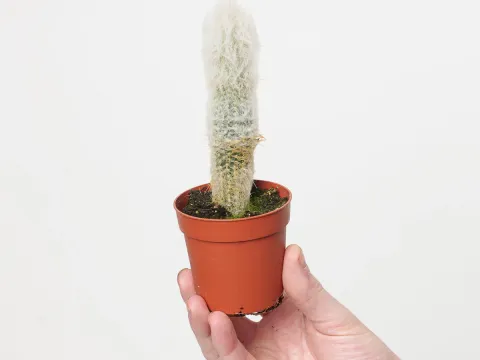
Espostoopsis
Espostoopsis
Espostoopsis is a unique monotypic genus of succulent plants belonging to the Cactaceae family. It is native to the rocky landscapes of the Bahia state in Brazil, where it thrives in extreme heat and arid conditions.
What the section contains

Espostoopsis
The plant is highly prized for its dense, woolly hair that covers the stem. To maintain this characteristic feature, it requires bright, direct sunlight throughout the year, especially during the active growing season.
For successful cultivation, the soil must be extremely well-draining. A typical mix consists of a large portion of coarse sand, perlite, and small gravel, ensuring that water never accumulates near the roots.
Watering requirements are strict: the substrate should be allowed to dry out completely between waterings. During the winter months, the plant enters a period of dormancy and should be kept almost entirely dry.
Temperature management is crucial. During the summer, the plant prefers temperatures between 22 and 28 degrees Celsius. Winter maintenance requires cooler temperatures, ideally between 12 and 15 degrees Celsius, to ensure health.
The most significant threat to Espostoopsis is root rot caused by poor soil drainage or overwatering. Once rot begins, it can quickly travel up the stem, making early detection and prevention vital.
Mealybugs are the most common pests affecting this species. Due to the dense white hairs on the cactus, these pests are often difficult to detect until they have established a significant colony.
Spider mites can also become a problem, particularly in dry indoor environments with poor air circulation. They can damage the surface of the cactus, causing yellowing and loss of aesthetic appeal.
Control of pests should be done using systemic insecticides that are safe for succulents. It is essential to avoid oil-based sprays, as they can damage the delicate hair covering of the plant.
Preventative measures include maintaining clean tools, using sterilized soil mixes, and providing good air movement in the growing area to prevent fungal growth and pest outbreaks.