
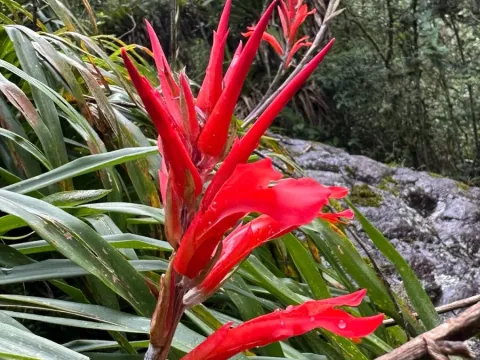
Pitcairnia
Pitcairnia
Pitcairnia is a diverse genus within the Bromeliaceae family, comprising perennial herbaceous plants native to the tropical regions of Central and South America. These plants are adapted to various habitats, ranging from epiphytic life on trees to terrestrial growth in rocky soil.
What the section contains
 Pitcairnia alata
Pitcairnia andreana
Pitcairnia andreana
Pitcairnia alata
Pitcairnia alata
Pitcairnia andreana
Pitcairnia andreana
 Pitcairnia angustifolia
Pitcairnia angustifolia
Pitcairnia angustifolia
 Pitcairnia arcuata
Pitcairnia arcuata
Pitcairnia arcuata
 Pitcairnia bifrons
Pitcairnia bifrons
Pitcairnia bifrons
 Pitcairnia brunnescens
Pitcairnia carinata
Pitcairnia carinata
Pitcairnia brunnescens
Pitcairnia brunnescens
Pitcairnia carinata
Pitcairnia carinata
 Pitcairnia diffusa
Pitcairnia diffusa
Pitcairnia diffusa
 Pitcairnia echinata
Pitcairnia echinata
Pitcairnia echinata
 Pitcairnia elongata
Pitcairnia elongata
Pitcairnia elongata
 Pitcairnia flammea
Pitcairnia flammea
Pitcairnia flammea
 Pitcairnia fusca
Pitcairnia fusca
Pitcairnia fusca
 Pitcairnia integrifolia
Pitcairnia integrifolia
Pitcairnia integrifolia
 Pitcairnia lehmannii
Pitcairnia lehmannii
Pitcairnia lehmannii
 Pitcairnia maidifolia
Pitcairnia maidifolia
Pitcairnia maidifolia
 Pitcairnia megasepala
Pitcairnia megasepala
Pitcairnia megasepala
 Pitcairnia muscosa
Pitcairnia muscosa
Pitcairnia muscosa
 Pitcairnia orchidifolia
Pitcairnia orchidifolia
Pitcairnia orchidifolia
 Pitcairnia punicea
Pitcairnia punicea
Pitcairnia punicea
 Pitcairnia reflexiflora
Pitcairnia reflexiflora
Pitcairnia reflexiflora
 Pitcairnia sanguinea
Pitcairnia sceptrigera
Pitcairnia sceptrigera
Pitcairnia spectabilis
Pitcairnia spectabilis
Pitcairnia sanguinea
Pitcairnia sanguinea
Pitcairnia sceptrigera
Pitcairnia sceptrigera
Pitcairnia spectabilis
Pitcairnia spectabilis
 Pitcairnia squarrosa
Pitcairnia squarrosa
Pitcairnia squarrosa
 Pitcairnia tabuliformis
Pitcairnia tabuliformis
Pitcairnia tabuliformis
 Pitcairnia undulata
Pitcairnia undulata
Pitcairnia undulata
Pitcairnia
The plant requires bright, indirect sunlight to thrive. Exposure to direct midday sun can lead to leaf scorching, while insufficient light prevents the plant from producing its characteristic vibrant inflorescences.
A well-draining, loose potting medium is critical for Pitcairnia health. A mix containing bark, peat moss, and perlite or coarse sand helps simulate the natural environment and prevents root suffocation.
Humidity management is essential for this species. Maintaining a moisture level above 50% is recommended, which can be achieved through regular misting or using a pebble tray with water underneath the pot.
The watering schedule should align with the drying cycle of the substrate. Keep the medium consistently moist during the active growing season but never soggy, and reduce watering frequencies during the dormant winter months.
Spider mites are common pests that thrive in the dry air often found indoors. They feed on plant sap, causing the foliage to lose its healthy color and develop speckled patterns.
Mealybugs can also infest the tight spaces at the base of the leaves, where they form white cottony masses. These pests should be addressed immediately with horticultural oils or insecticidal soap.
Scale insects present a significant risk by adhering to the undersides of leaves. Their feeding weakens the plant and can facilitate the growth of sooty mold due to honeydew excretion.
Root rot caused by Phytophthora or Pythium species is usually a result of poor drainage or overwatering. Once roots become necrotic, the plant often struggles to recover, making prevention through drainage control vital.
Cultural hygiene is the best defense; keep the foliage clean, ensure proper air circulation around the plants, and regularly inspect the undersides of leaves for early detection of any infestations.