
Pitcairnia undulata
Pitcairnia undulata
Description
Growing requirements
Pitcairnia undulata is an herbaceous perennial plant belonging to the Bromeliaceae family. Native to the tropical regions of Peru, this species is well-known for its adaptation to high-altitude forest environments.
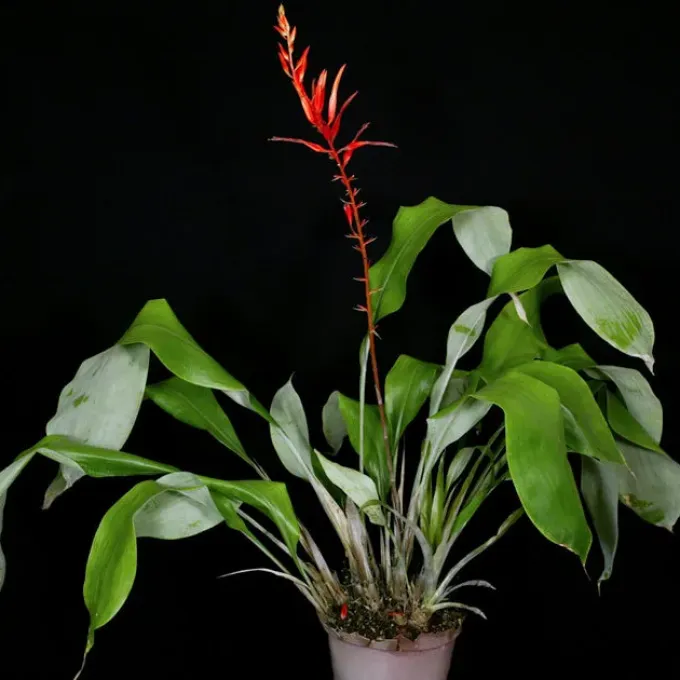
The botanical characteristics of this species include a basal rosette of long, strap-shaped leaves with distinct undulate margins. Its inflorescence is an elegant raceme consisting of tubular, vivid-colored flowers that provide significant ornamental value.
In terms of climatic requirements, this plant thrives in conditions that mimic its natural habitat. It requires bright, indirect sunlight and a stable temperature range, typically between 20°C and 25°C, to maintain consistent growth cycles.
Regarding soil management, Pitcairnia undulata necessitates a well-draining substrate. A mix of peat, bark, and perlite is often recommended to ensure proper aeration, which prevents the suffocation of the root system.
The economic and practical use of this plant is strictly limited to the ornamental sector. It is highly valued among collectors of tropical flora and interior designers for use in indoor displays and specialized botanical greenhouse environments.
Main diseases and pests
Common pests affecting Pitcairnia undulata include scale insects, mealybugs, and spider mites. These pests are particularly aggressive in environments where air humidity levels fall below the recommended thresholds for tropical bromeliads.
The plant is susceptible to various root rot pathogens caused by Phytophthora or Pythium species. These infections are almost always linked to poor drainage or excessive irrigation practices that cause water to pool in the rosette or substrate.