
Pitcairnia echinata
Pitcairnia echinata
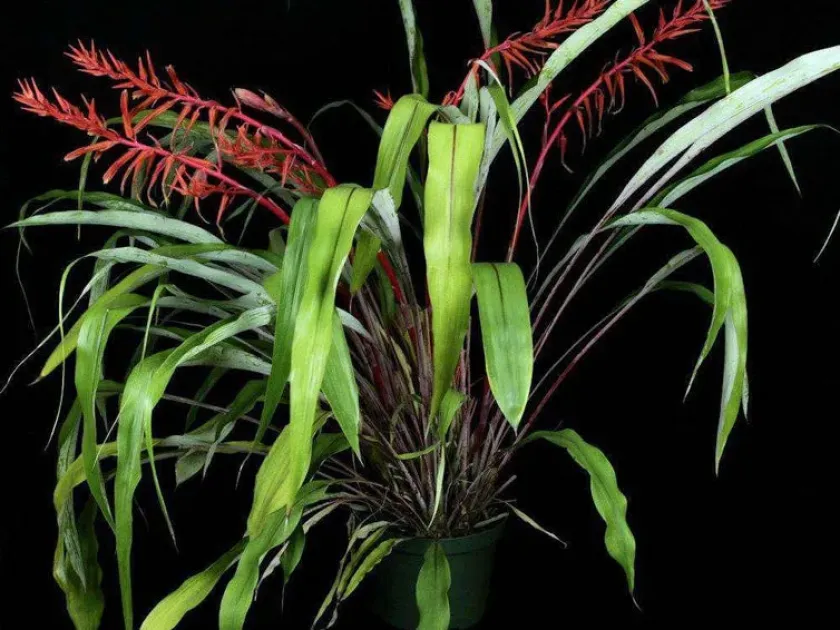
Description
Growing requirements
Pitcairnia echinata is a perennial species belonging to the Bromeliaceae family. Native to the tropical regions of South America, particularly Peru and Ecuador, it is highly regarded for its distinctive morphology and adaptability to warm climates.
The plant is characterized by its stiff, spiny-edged leaves which form a rosette. Biologically, this structure allows the plant to efficiently channel moisture toward its base, which is an evolutionary response to the environment of its native tropical habitat.
Regarding climate, this species thrives in moderate temperatures between 18°C and 25°C. It requires bright but filtered sunlight, as direct exposure can lead to leaf scorching, especially in low-humidity environments.
The growing substrate must be well-draining, typically consisting of a mix of peat moss, pine bark, and perlite. Proper air circulation around the root zone is crucial to mimic the natural epiphytic or lithophytic conditions of its origin.
In terms of agricultural and horticultural use, Pitcairnia echinata is utilized primarily as an ornamental specimen. Its unique aesthetic makes it a sought-after addition for botanical collections and specialized interior green spaces.
Main diseases and pests
Typical pests affecting this plant include mealybugs and scale insects, which often hide in the dense foliage of the leaf rosette. Maintaining cleanliness and checking the plant regularly helps manage these threats before they cause significant damage.
Fungal infections, primarily root rot, occur when the medium is left consistently waterlogged. To avoid these issues, it is essential to ensure that water does not sit in the center of the rosette for extended periods.