
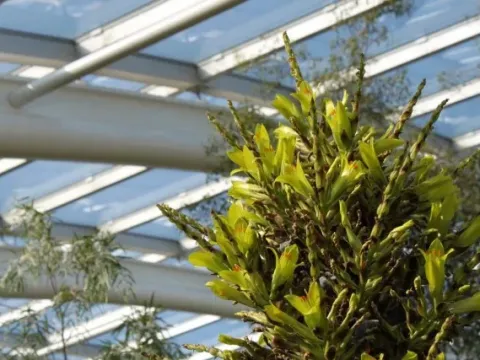
Puya
Puya
Puya is a genus of perennial plants within the Bromeliaceae family, comprising several species noted for their extreme size and structural complexity. These plants are characterized by large, often spiny, rosette-forming leaves that provide a robust defense against herbivores in their natural habitats.
What the section contains


Puya
The genus originates from the Andes mountains, ranging from Chile to Colombia. These plants are uniquely adapted to high-altitude environments, thriving in rocky soils with high drainage requirements and exposure to intense solar radiation and significant temperature fluctuations.
For cultivation purposes, Puya requires a full-sun environment with well-aerated substrates. Soils must be mineral-heavy, mimicking their native rocky screes, to ensure that water drains rapidly and roots are not kept in saturated conditions, which is essential for survival.
In greenhouse settings, irrigation should be strictly controlled, mimicking the sporadic precipitation patterns of the high-altitude Andes. During winter months, the plants require a dormant phase with minimal water to prevent root rot, which is the primary cause of failure in cultivation.
Economically, Puya species are primarily managed for ornamental use in arid-landscaping and specialized conservatory collections. Some species are also valued in their native regions for potential fiber extraction from the leaves and as natural protective barriers against livestock.
Root rot caused by Phytophthora or similar fungal pathogens is the most critical threat to the longevity of Puya. This condition is almost exclusively induced by poor drainage, overwatering, or high humidity levels within the growing environment.
Mealybugs are the most persistent pest for this genus. They typically cluster deep within the dense leaf axils, making physical removal difficult. Infestations can significantly weaken the plant's growth vigor and introduce viral or fungal infections into the wounded tissues.
Scale insects represent another common threat to cultivated specimens. They attach firmly to the succulent leaves, extracting sap and leaving behind honeydew, which often results in secondary sooty mold growth on the leaf surfaces, further reducing photosynthetic efficiency.
While Puya is generally robust, improper airflow in enclosed spaces promotes the spread of pathogens. Increasing ventilation and maintaining a dry environment around the leaf crown is the best cultural practice to prevent outbreaks of both pests and diseases.
Mechanical injury to the leaf structure often occurs during handling due to the sharp marginal spines. These wounds must be kept dry; any contact with moisture in a wounded state significantly increases the probability of bacterial rot setting in.