
Pitcairnia bifrons
Pitcairnia bifrons
Description
Growing requirements
Pitcairnia bifrons is a distinctive species belonging to the Bromeliaceae family. Originating from the tropical regions of South America, specifically Venezuela, this plant is well-adapted to high-humidity environments. Unlike many other terrestrial plants, it thrives in niches such as rock crevices or tree bark, reflecting its dual terrestrial and epiphytic nature.
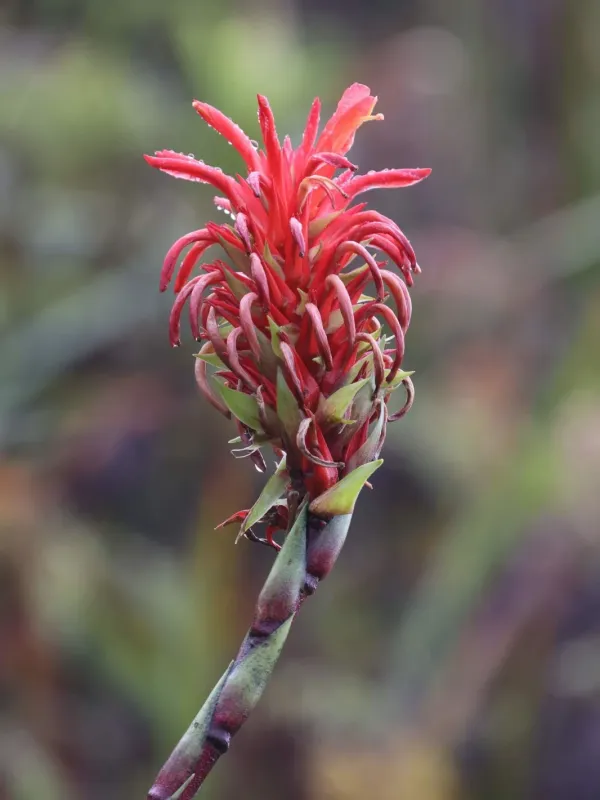
Botanically, it is characterized by an elegant rosette of long, slender leaves. A key identifying feature is the dense, silver-white indumentum found on the underside of the leaves, which provides the plant with its specific name and helps to reduce water loss. The inflorescence is typically stalked and features vibrant, long-lasting flowers that attract pollinators in their native habitat.
Regarding climatic requirements, this species favors stable warm conditions, ideally between 18 and 26 degrees Celsius. It is highly sensitive to cold drafts and sudden drops in temperature, which can lead to metabolic stress. Providing consistent ambient warmth is essential for maintaining the vigor of the plant throughout the year.
The growing medium must be highly porous and well-draining. A mix consisting of pine bark, perlite, coconut coir, and leaf mold provides the necessary aeration for the roots while retaining adequate moisture. The pH should be maintained in the slightly acidic range, ensuring optimal nutrient uptake for the plant.
Proper water management involves keeping the substrate consistently moist but never waterlogged. Since the roots are susceptible to rotting, a drainage layer is mandatory. Additionally, the plant benefits from high humidity levels, achieved through regular misting or placing the container on a tray with damp pebbles to create a microclimate.
Main diseases and pests
The primary pests affecting Pitcairnia bifrons include spider mites, which are particularly active in dry air conditions, and mealybugs that congregate in the leaf axils.
Fungal issues, primarily root rot and leaf spot, are common if the plant is subjected to poor drainage or stagnant air. Ensuring good airflow and avoiding overhead watering in the evenings can significantly reduce the risk of these pathogens.