
Pitcairnia punicea
Pitcairnia punicea
Description
Growing requirements
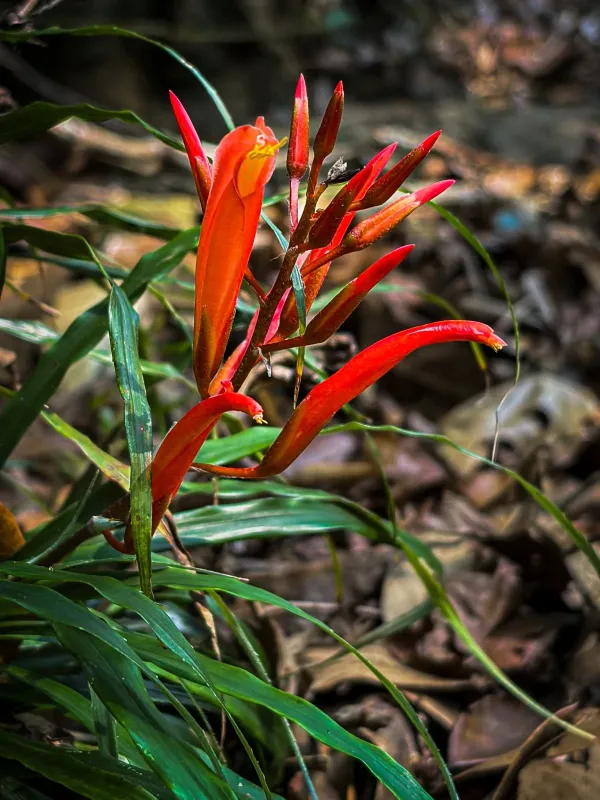
Pitcairnia punicea is a herbaceous perennial plant belonging to the Bromeliaceae family. Unlike many epiphytic bromeliads, this species develops a significant root system, making it well-suited for terrestrial cultivation in nutrient-rich media.
Originating from the tropical forests of Central and South America, the plant thrives in areas with consistent humidity and filtered sunlight. In its natural habitat, it occupies the forest floor, protected from direct solar intensity.
For successful cultivation, temperatures should be maintained between 20°C and 25°C. The plant exhibits high sensitivity to sudden temperature drops, which can lead to structural damage and stunted growth patterns.
The soil requirements involve a well-draining substrate rich in organic matter. A mixture consisting of peat, pine bark, and perlite is ideal to ensure adequate aeration while retaining enough moisture for healthy root development.
Irrigation must be performed carefully; during the active growth phase, the soil should be kept consistently moist but never waterlogged. During dormant winter months, it is advisable to reduce the frequency of watering to avoid root rot.
Main diseases and pests
Common pests associated with this crop include spider mites and mealybugs. These organisms thrive in environments with low humidity, making regular air moisture control a vital part of the overall plant health strategy.
Pathogenic threats primarily include root and crown rot, typically caused by excessive irrigation or poor drainage systems. Fungal infections often manifest as dark spots on the leaf base or yellowing of the foliage.
To prevent these issues, it is essential to provide adequate ventilation in the growing area. Removing debris from the leaf axils prevents the accumulation of water, which is a common breeding ground for pathogens.
In case of pest infestation, targeted application of environmentally safe insecticides is recommended. Always ensure that the chemical concentrations are appropriate for delicate tropical plant varieties.
Good agricultural practices, such as sterilizing potting mixes and maintaining proper spacing between plants, significantly reduce the incidence of disease and pest outbreaks in the production cycle.