
Pitcairnia tabuliformis
Pitcairnia tabuliformis
Description
Growing requirements
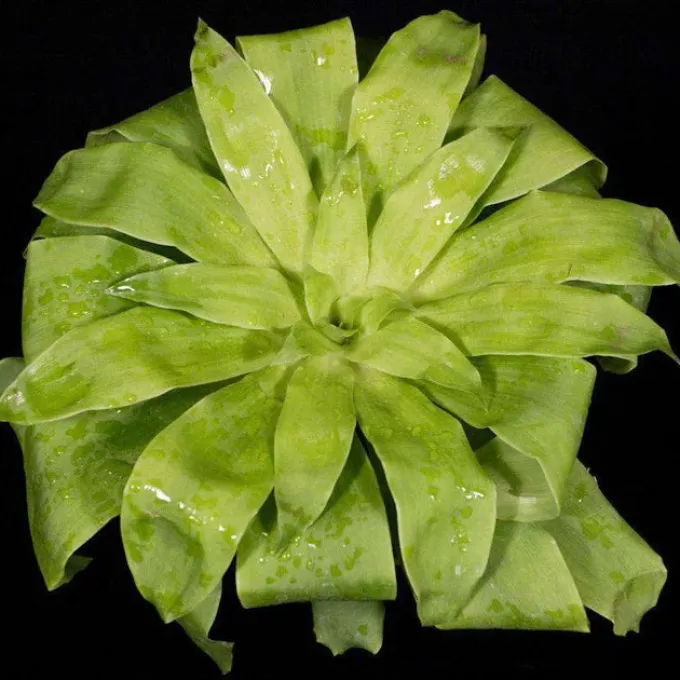
Pitcairnia tabuliformis belongs to the Bromeliaceae family and is native to the rocky, humid regions of Mexico. This unique species is prized for its perfectly flat, tabular rosette of leaves that spreads across the ground, creating a distinct aesthetic in botanical collections.
The plant grows best in a well-draining, airy substrate. A mixture of pine bark, perlite, and high-quality peat moss provides the necessary aeration for its sensitive roots. It is essential to ensure the medium remains consistently moist but never waterlogged to maintain plant health.
Environmental conditions are critical for this species. It requires a humid atmosphere, ideally above 60% relative humidity, to prevent the tips of the leaves from drying out. Consistent temperatures between 20°C and 25°C mimic its natural habitat in the Mexican highlands.
Regarding light requirements, Pitcairnia tabuliformis thrives in bright, indirect sunlight. Exposure to direct midday sun can cause severe leaf scorch, damaging the structural integrity of the flat rosette. A north-facing window or filtered greenhouse light is ideal.
Reproduction is primarily vegetative, occurring through offsets that develop after the main plant finishes blooming. As the parent rosette slowly declines, these offshoots should be carefully separated and repotted once they reach a sufficient size to thrive independently.
Main diseases and pests
Common pests include mealybugs and spider mites, which often thrive in environments with poor air circulation. Regular misting and checking the underside of the leaves are fundamental practices for early detection and prevention of infestations.
Fungal pathogens pose the greatest risk, particularly when water is allowed to pool in the center of the leaf rosette. Implementing a strict watering schedule and ensuring proper ventilation are the most effective strategies for preventing crown rot and leaf spot diseases.