
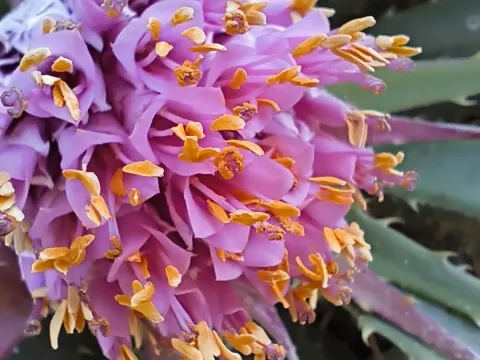
Ochagavia
Ochagavia
Ochagavia is a genus of perennial plants belonging to the Bromeliaceae family. Unlike many epiphytic relatives, these plants are primarily terrestrial, establishing themselves in rocky or sandy environments that require significant adaptation to limited nutrient availability.
What the section contains

Ochagavia
The native range of this genus is concentrated in Chile. These plants inhabit diverse ecosystems, ranging from coastal bluffs to mountainous slopes, where they are exposed to harsh winds, direct sunlight, and distinct seasonal variations in rainfall patterns.
Botanically, the plant is characterized by a dense rosette of tough, often spiny, evergreen leaves. These rosettes serve as a water-storage mechanism, enabling the plant to survive extended periods of drought while maintaining its structural integrity in adverse environmental conditions.
Cultivation requires specific environmental conditions that mimic the plant's native habitat. High light intensity is essential for healthy development, while the choice of substrate is paramount; it must be porous and extremely well-draining to prevent the root system from suffocating in wet soil.
The commercial and landscape utility of Ochagavia is focused on its role as a unique ornamental specimen. Due to its striking floral spikes and architectural form, it is highly valued in botanical gardens and specialized collections, particularly in regions with Mediterranean-like climates.
The primary threat to the health of Ochagavia is root rot caused by stagnant water or excessively rich, water-retaining soils. Maintaining a strictly dry-to-moist irrigation cycle is vital, as the plant is highly susceptible to pathogens when water accumulates within the leaf axils.
Insects such as mealybugs and scale insects represent the main biological threats. These pests tend to colonize the base of the leaf rosettes, where they are protected from environmental factors and manual removal, necessitating systemic treatments to control infestations effectively.