
Pitcairnia squarrosa
Pitcairnia squarrosa
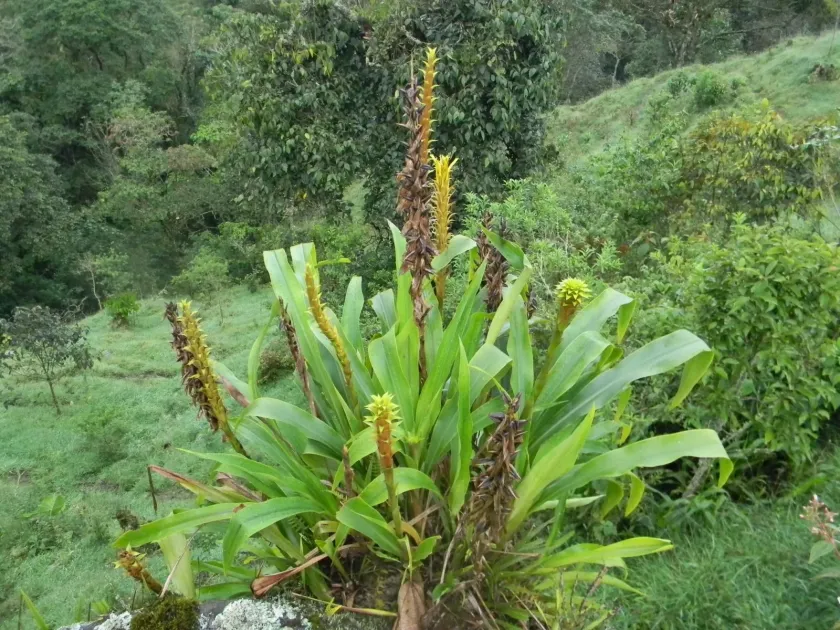
Description
Growing requirements
Pitcairnia squarrosa is a fascinating member of the Bromeliaceae family, native to the tropical forests of South America. This species is celebrated for its distinctive foliage and growth habit, often adapting to both terrestrial and semi-epiphytic lifestyles.
In terms of environmental conditions, this plant thrives in bright, indirect sunlight. It is essential to avoid intense, direct solar exposure which can bleach the leaves or cause permanent tissue damage, common in high-altitude or open tropical areas.
The plant requires a high level of ambient humidity to simulate its natural rainforest habitat. Maintaining humidity levels between 60% and 80% is crucial for the development of healthy, vibrant leaves and to prevent the tips from becoming brown and brittle.
An ideal potting mix for Pitcairnia squarrosa consists of well-draining materials such as orchid bark, perlite, and high-quality peat moss. This ensures that the roots receive ample oxygen while retaining enough moisture for metabolic activities.
Temperature management should focus on consistency, keeping the environment between 20°C and 25°C throughout the growing season. While the plant can tolerate slight fluctuations, it is highly sensitive to temperatures dropping below 15°C.
Main diseases and pests
Pitcairnia squarrosa is susceptible to several common pests, most notably mealybugs and scale insects. These organisms tend to colonize the base of the leaf rosettes, where they extract sap and weaken the overall plant structure.
Root rot is the most significant pathological threat, typically induced by poor drainage or overwatering. When the soil remains saturated for extended periods, the roots lose their ability to breathe, leading to rapid decay and systemic collapse.
Spider mites are a recurring issue in environments with low humidity, particularly during the winter months when indoor heating systems are active. They create fine webbing and cause chlorotic spots on the leaf surfaces.
Effective management includes regular inspection of the plants and immediate quarantine if pests are detected. Using systemic insecticidal soaps or horticultural oils can help control infestations without harming the plant's delicate leaf tissues.
Prevention is key, involving proper air circulation and careful monitoring of moisture levels. Ensuring the substrate has dried out slightly between waterings is a standard practice to keep the root system healthy and resilient against opportunistic pathogens.