
Pitcairnia alata
Pitcairnia alata
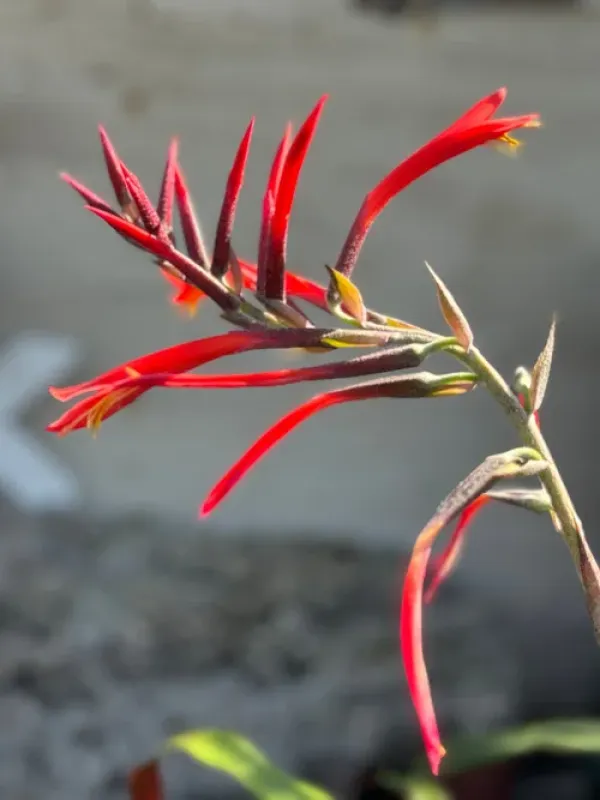
Description
Growing requirements
Pitcairnia alata is a distinguished member of the Bromeliaceae family, native to the tropical forests of South America. It is highly valued in botanical collections for its unique morphological features.
The plant grows in a basal rosette form, characterized by long, slender, arching leaves. The specific name "alata" refers to the distinct winged petioles found at the base of its foliage, which is a key identification trait.
This species requires a bright, indirect light environment to maintain its structural integrity and vibrant green color. Excessive direct sunlight can cause leaf scorch and dehydration of the sensitive foliage.
The climate requirements include a warm, humid environment that mimics its natural cloud forest habitat. Temperatures should remain between 20°C and 25°C throughout the year, avoiding cold shocks.
Regarding soil, Pitcairnia alata demands an exceptionally well-draining medium. A mixture of orchid bark, perlite, and peat moss is recommended to ensure both moisture retention and adequate aeration for the root system.
Main diseases and pests
Common pests affecting this species include mealybugs and scale insects, which often hide in the tight spaces between leaf bases. These pests can rapidly colonize the plant if left unchecked.
Spider mites are frequently encountered when the ambient humidity is insufficient. These pests puncture the leaf cells, leaving characteristic mottled patches that diminish the plant's ornamental value.
Root rot is the most common physiological disorder caused by overwatering or poor drainage. Once the roots are compromised, the plant struggle to intake nutrients, leading to yellowing of the leaves.
Fungal infections, such as leaf spot, can develop in stagnant, humid environments with poor air circulation. Improving ventilation is essential to mitigate the spread of these pathogens.
Integrated pest management, including regular inspection and the use of targeted horticultural soaps or systemic insecticides, remains the most effective strategy for preserving the plant's health.