
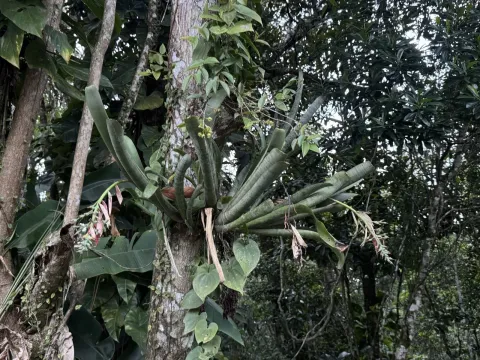
Quesnelia
Quesnelia
Quesnelia is a genus of perennial flowering plants belonging to the Bromeliaceae family. Native to the tropical forests of Brazil, these plants are known for their architectural rosette form and specialized adaptation to high-humidity environments as epiphytes or lithophytes.
What the section contains


Quesnelia
The botanical structure of the plant revolves around a central tank-like rosette formed by rigid, often serrated leaves. This tank is essential for the plant's survival in nature, as it traps moisture, minerals, and organic debris, allowing the plant to absorb nutrients through leaf scales called trichomes.
To cultivate Quesnelia successfully, provide bright, filtered sunlight. Direct exposure to intense afternoon sun can cause irreversible leaf chlorosis and burn injuries. A stable, warm climate with temperatures ranging from 18 to 25 degrees Celsius is ideal for active growth periods.
The soil or growing medium must be highly porous and well-draining. A typical mix includes a combination of orchid bark, peat moss, perlite, and charcoal. This composition prevents root suffocation and promotes the circulation of air, which is vital for the health of bromeliad roots.
Irrigation practices for Quesnelia differ from most potted plants. During the growing season, fill the central rosette with filtered water, ensuring it is refreshed regularly to avoid stagnation. Maintain the soil slightly moist but never waterlogged to prevent root decay.
The most common health issues for Quesnelia arise from poor drainage and low air movement, which contribute to bacterial and fungal rot. If the base of the plant feels soft or discolored, it is a primary indicator of overwatering and root damage.
Pests such as scale insects and mealybugs are significant threats to indoor bromeliad collections. These insects cluster in the leaf axils, making them difficult to detect early. Manual removal using alcohol-soaked swabs or systemic insecticidal treatment is recommended.
Spider mites can proliferate rapidly in low-humidity indoor environments, leading to stippling on the leaves and a general loss of plant vigor. Consistent misting and maintaining optimal humidity levels act as effective preventative measures against mite infestations.
Nutrient deficiency or chemical buildup can result in leaf tip browning. It is best to use a water-soluble fertilizer specifically formulated for bromeliads, applied at half-strength during the warmer months, ensuring that salt accumulation does not occur in the potting medium.
Monitoring for signs of aphids during the bloom cycle is important, as these insects are attracted to the sugary secretions of the inflorescence. Swift action using mild horticultural soap or neem oil is usually sufficient to resolve minor pest outbreaks without harming the plant.