
Pitcairnia flammea
Pitcairnia flammea
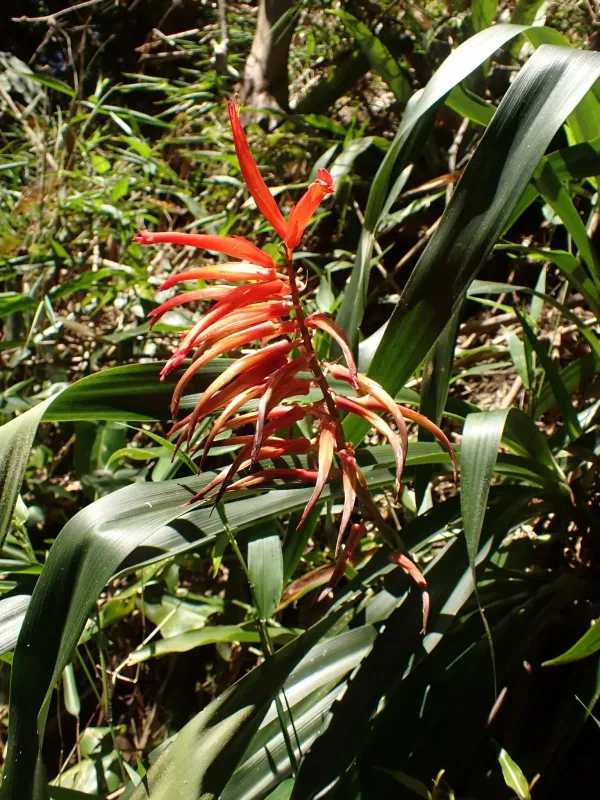
Description
Growing requirements
Pitcairnia flammea is a perennial herbaceous species belonging to the diverse Bromeliaceae family. Originating from the tropical forests of Brazil, this plant has adapted to humid environments, growing as an epiphyte on trees or terrestrially on the forest floor.
The botanical structure of the plant features a rosette of elongated, leathery leaves that provide a lush appearance. Its most distinguishing trait is the inflorescence, which produces vibrant, flame-colored bracts, making it a highly sought-after ornamental variety for plant enthusiasts.
To cultivate this plant successfully, one must replicate its natural tropical habitat by maintaining high ambient humidity and temperatures between 20°C and 25°C. Exposure to direct sunlight should be avoided, as it can damage the delicate foliage, while bright, indirect light promotes optimal growth.
The planting substrate must be light, airy, and well-draining, typically consisting of bark, peat, and perlite. Proper drainage is essential, as the roots are highly susceptible to rot if they remain waterlogged for extended periods, necessitating a balance between hydration and aeration.
In terms of хозяйственное usage, Pitcairnia flammea serves strictly as an ornamental crop used in interior landscaping and conservatories. Its unique aesthetic qualities make it a popular focal point in botanical collections and high-end indoor plant displays.
Main diseases and pests
Common pests affecting this species include spider mites and scale insects, which thrive in dry indoor environments. Consistent monitoring and maintaining proper humidity levels are the best preventative measures to keep these pests from colonizing the leaves.
Fungal pathogens and root rot are the primary threats caused by poor agricultural practices such as overwatering. Providing adequate airflow and using specialized fungicide treatments when signs of decay appear are necessary to ensure the long-term survival of the plant.