
Racinaea
Racinaea
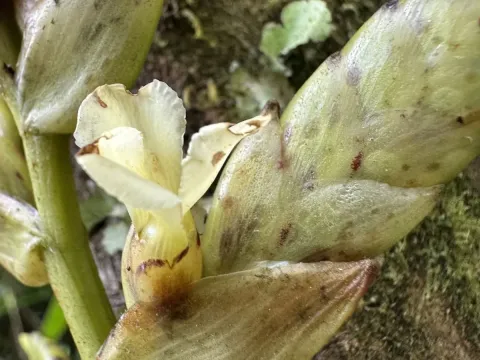
Racinaea is a genus of epiphytic plants belonging to the Bromeliaceae family. These plants are native to the tropical regions of Central and South America, where they typically thrive in high-altitude, humid forest ecosystems.
What the section contains


Racinaea
Botanically, Racinaea species are characterized by their compact rosette structure, which serves to collect moisture and organic debris. Their leaves are often stiff and slender, adapted to withstand the varying moisture levels of their natural epiphytic habitats.
Cultivating Racinaea requires mimicking their native rainforest conditions, specifically high relative humidity and consistent, bright, indirect light. These plants do not grow well in traditional garden soil and instead require specialized substrates like orchid bark or mounting on driftwood.
Watering techniques must be precise; water should be applied to the central rosette or misted directly onto the leaves, allowing for quick drainage. Ensuring good air circulation around the foliage is essential to prevent the accumulation of stagnant moisture.
The optimal temperature range for these species is typically moderate, between 18°C and 24°C. Excessive heat or direct sunlight should be avoided, as it can cause desiccation and damage to the specialized leaf tissues.
Common pests affecting Racinaea include scale insects, mealybugs, and spider mites, which tend to hide in the tight leaf axils. Early detection and the use of insecticidal soaps are the most effective management practices for these pests.
Pathogenic threats usually stem from improper cultural practices, such as waterlogging or poor ventilation, which trigger fungal or bacterial crown rot. Effective control relies on improving cultural conditions and the targeted use of appropriate fungicides.